Voice Over Artist Career: Real Pay, Auditions & Breaking Into the Industry
$100/Hour to $10,000+ Commercial Jobs
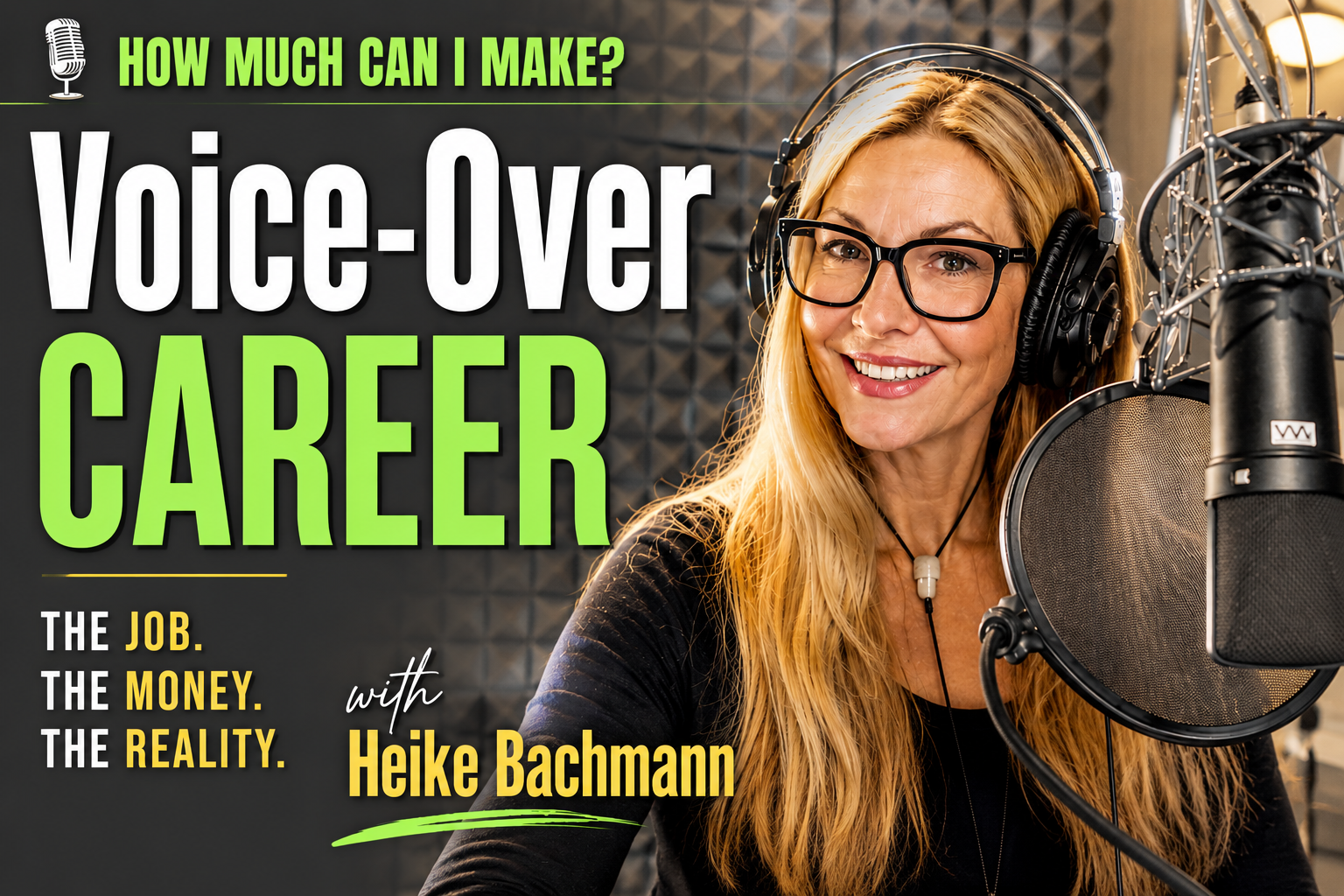
In this episode, we go behind the scenes with Heike Bachmann a German-born voice-over artist based in New York who has spent nearly 30 years lending her voice to campaigns for Pfizer, Google, Netflix, and the children’s series Caillou. She explains how auditions, recording sessions, and buyout fees actually work, and how AI is already reshaping the business of being a voice.

What you’ll learn in this episode:
- What a professional voice-over artist actually does
- How Heike accidentally landed her first voice-over job
- How much beginner and experienced voice actors can earn
- How commercial usage fees can turn a short recording into a $10,000+ job
- How voice-over auditions and agents work today
- Why acting experience isn’t necessarily required
- What equipment you need for a professional home voice-over studio
- What actually happens inside a recording session — and why lip-syncing a foreign-language dub is harder than it looks
- How AI voice cloning is already changing the industry
- Why voice actors need to carefully protect the rights to their voices

How much can you earn?
Voice-over pay is freelance and project-based, with rates that scale with experience, project length, and how the recording will ultimately be used. Non-union, foreign-language voice talent are paid differently than union American voice actors — instead of SAG-AFTRA residuals, they negotiate flat buyout or “usage” fees for each platform a recording runs on.
Starting out (per hour): ~$100/hour
Standard session rate: ~$250/hour, 2-hour minimum (~$500 per session)
Long-form / audiobook-style projects (per finished hour): $250–$600
AI model-training / phrase recording (per finished hour): $250–$600
Buyout / usage fee (social media only, per year): ~$3,000–$4,000
Buyout / usage fee (social media + radio + TV, per year): $10,000+
SAG-AFTRA residuals: Available to union American voice actors; non-union foreign-language talent are not eligible and are paid via buyout instead
You may also like:
Explore More Performance & Creative Careers →
FAQ
How much do voice-over artists make per hour?
Voice-over artists starting out typically charge around $100 per hour. Established freelance talent charge a standard session rate of about $250 per hour with a two-hour minimum (roughly $500 per session). Longer projects like audiobooks or AI model-training work are usually billed per finished hour, ranging from about $250 to $600.
How do voice-over artists get paid for commercials?
Non-union voice-over artists are paid through usage or buyout fees rather than SAG-AFTRA residuals. A client pays a flat fee to use a recording for a set period, usually one year. Usage limited to social media runs about $3,000–$4,000 per year, while a full buyout covering social media, radio, and TV can reach $10,000 or more per year, and clients often renew the license annually without a new recording session.
How do you break into voice-over work?
Most voice-over careers start by accident rather than formal training — a distinctive voice, a demo tape, or a chance connection through teaching, theater, or another creative field. Today, the standard path is building a profile on audition portals like Voices.com and Voice123, submitting auditions that match your voice type, and eventually signing with one or more agents once you have a track record.
What is a voice-over audition like today?
Before COVID, auditions mostly happened in person at a studio on a scheduled time slot. Today, most auditions arrive by email or through online casting portals: the artist receives a script and a deadline, records the audition at home, uploads it, and proposes a rate within the client’s budget range. Clients often stop reviewing after the first handful of strong submissions, so response speed matters.
Is AI replacing voice-over artists?
Not yet, but working voice artists expect it eventually will. In the meantime, many are paid to help provide the training data AI voice models are built on, including reading scripted phrases for model training. Artists are advised to only take AI-related jobs that come with a signed contract specifying exactly how their voice and data can be used, to prevent unauthorized cloning.
What equipment do you need to start a home voice-over studio?
A basic home voice-over setup costs roughly $1,000. That covers a good condenser microphone (around $300–$400), an audio interface (around $250–$300), and acoustic treatment plus cables. A professional-grade Neumann microphone costs significantly more, but budget condenser mics from other brands can sound comparable for a fraction of the price.
Do you need acting training to become a voice-over artist?
No, and some working voice-over artists argue formal acting training can actually work against you. A strong voice-over performer needs to stay completely present in the moment, delivering each word and syllable with energy without anticipating what comes next — a skill that doesn’t always overlap with stage or screen acting technique.
This show first aired on August 2026