
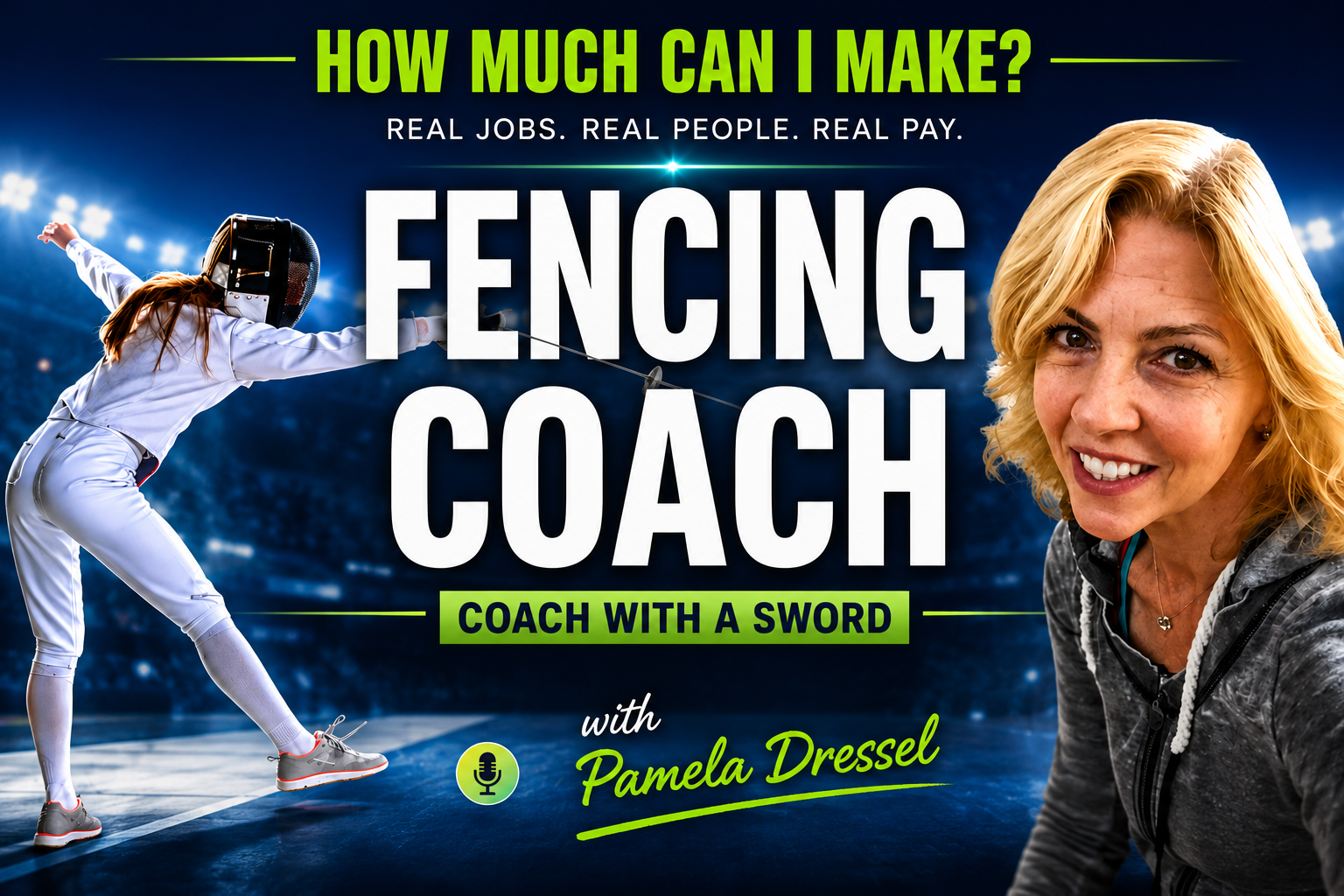
Inside a Fencing Coach Career – Salary, Pay & Opportunities
$30K – $150K
We speak with Pamela Dressel of On Target Fencing about building a career in this specialized sport—from training athletes to running lessons and growing a steady stream of clients. This episode gives a clear, behind-the-scenes look at a niche but rewarding coaching path and practices.
What you’ll learn in this episode:
- How to become a fencing coach
- Why fencing is called the 100MPH Chess?
- What the job actually involves day to day
- How coaches build a client base
- How much you can earn
This is a career built one student, one lesson, and one competition at a time.
How much can you earn?
- Entry-level / assistant: $30K–$50K or $20–$50 per lesson
- Experienced coaches: $60K–$100K+
- Top coaches / private clubs: $150K+
Private lesson fees (often $30–$60 per 20 minutes), camps, and tournament coaching can significantly increase total income, especially for coaches working with competitive athletes.
Factors That Impact Fencing Coach Pay
Weapon Specialization: Coaches specialized in Epee, Foil, or Sabre may find different demand levels depending on the region, though Foil and Epee generally have the largest student bases.
Geography: In the U.S., the “Fencing Corridors” (Northeast/Tri-state area, California, and Texas) offer the highest pay due to the concentration of competitive clubs and wealthy clientele.
Pedigree: Former Olympians or World Champions can command significantly higher private lesson rates (often 80–100+ per session).
Institutional vs. Private: Collegiate coaches have better job security and benefits (health insurance, 401k), whereas private club coaches have a higher “uncapped” earning potential through volume of lessons.
Find out about other unique and unusual jobs →
FAQ
How much do fencing coaches make?
Fencing coaches typically earn between $30,000 and $100,000+, with top private coaches and club owners earning $150,000 or more.
How do fencing coaches get paid?
Income comes from hourly lessons, club salaries, private coaching, camps, and competition fees.
Do you need certification to become a fencing coach?
While not always required, certifications from fencing organizations and competitive experience can improve credibility and earning potential.
Is fencing coaching a full-time career?
It can be, especially for coaches who build a strong client base or run their own clubs.
What are the highest-paying opportunities in fencing?
Elite private coaching, training competitive athletes, and operating successful fencing clubs offer the highest earning potential.
This podcast is nominated for 2026 Women in Podcasting Award!