The Business of Mushrooms: Why Fungi May Be One of the Biggest Opportunities of the Next Decade
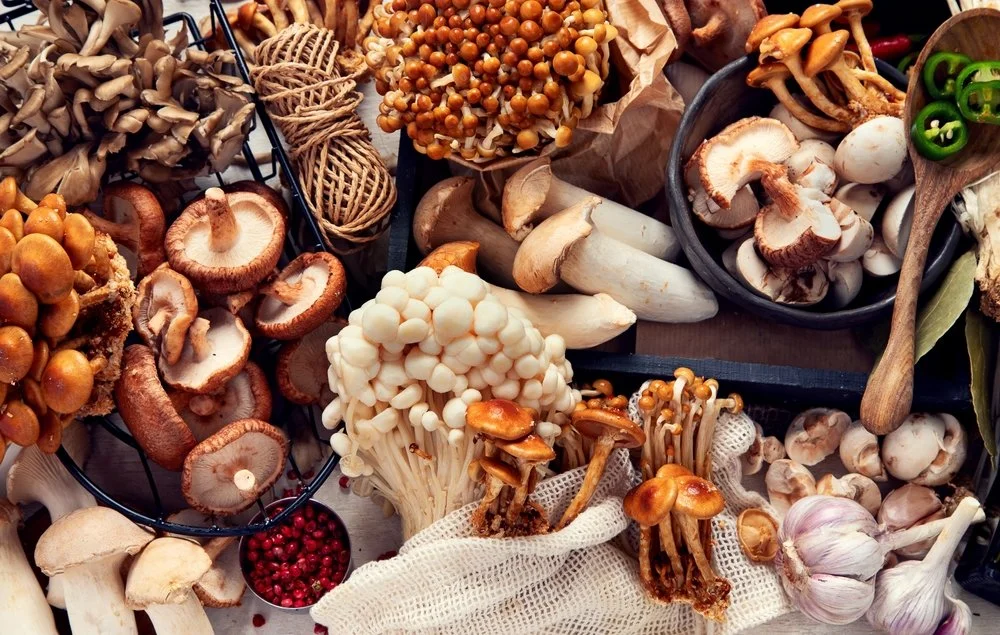
Walk through any forest after a rainstorm and you'll see them everywhere—growing from fallen logs, peeking through leaves, or quietly breaking down dead trees. Most people barely notice them.
But mushrooms are far more than a food. They represent one of the fastest-growing industries in agriculture, health, biotechnology, and environmental science.
When I interviewed John Michelotto, founder of Catskill Fungi, for my podcast How Much Can I Make?, one thing became clear: we are only beginning to understand what fungi can do. Listen to the conversation.
Scientists estimate there may be between 2 and 10 million species of fungi on Earth, yet we've identified less than 5%of them. Imagine discovering less than five percent of all mammals or birds. That's how much remains unknown.
More Than Food
Most people think of mushrooms as ingredients.
Scientists think of them as an entire biological kingdom.
Unlike plants, fungi don't use sunlight for energy. Instead, they recycle dead organic matter, form partnerships with trees, create medicines, and help keep entire ecosystems alive.
Without fungi, forests would literally drown in dead wood.
The Rise of Medicinal Mushrooms
Interest in medicinal mushrooms has exploded over the past decade.
Walk into almost any health food store today and you'll find shelves filled with mushroom powders, capsules, coffees, and tinctures.
Some of the best-known include:
Lion's Mane
Perhaps the fastest-growing medicinal mushroom.
Researchers are studying Lion's Mane for its potential effects on cognitive function and nerve growth. Early studies suggest compounds in Lion's Mane may stimulate nerve growth factor (NGF), a protein involved in maintaining healthy neurons.
While more large human studies are needed, it's one of the most researched medicinal mushrooms available today.
Reishi
Often called "The Mushroom of Immortality," Reishi has been used in traditional Chinese medicine for over 2,000 years.
Modern research is investigating its potential role in:
Immune system regulation
Stress management
Sleep quality
Inflammation
Cordyceps
Once so rare that only Chinese royalty could afford it, Cordyceps is now commercially cultivated.
Athletes have become interested in Cordyceps because research suggests it may improve oxygen utilization and endurance, although results remain mixed.
Turkey Tail
One of the most extensively researched medicinal mushrooms.
In Japan, extracts from Turkey Tail are prescribed alongside certain cancer treatments to support immune function.
Research continues into how its beta-glucans interact with the immune system.
The Mushroom Business Boom
One of the most interesting parts of my conversation with John wasn't the science.
It was the business.
Instead of building a traditional mushroom farm, he built multiple revenue streams around fungi.
Today Catskill Fungi offers:
Guided mushroom walks
Workshops
Mushroom retreats
Private land consultations
Educational programs
Medicinal mushroom extracts
International mushroom tours
That's a valuable lesson for any entrepreneur.
The highest-value businesses often aren't selling commodities—they're selling knowledge, experiences, and expertise.
Mushroom Farming Is Growing
Commercial mushroom production has become a multi-billion-dollar global industry.
While giant farms produce button mushrooms by the ton, thousands of small growers have found profitable niches by specializing in gourmet varieties like:
Lion's Mane
Oyster mushrooms
Shiitake
Maitake
Chestnut mushrooms
Many start with surprisingly small operations—garages, basements, or climate-controlled shipping containers.
Some eventually supply restaurants, farmers markets, grocery stores, and specialty food distributors.
Mushrooms Are Becoming Building Materials
The other frontier is industrial rather than medicinal. Mycelium, the root-like network fungi use to grow, is being engineered into leather alternatives, packaging, building panels, and composite materials. More than sixty fungi-focused startups have raised over $500 million combined, and the mycelium materials space is drawing serious attention from biotech researchers and manufacturers looking for sustainable alternatives to synthetic materials. Michelotti mentioned this as one of the fastest-growing corners of mycology right now, alongside mycoremediation, using fungi to clean toxins out of soil, the field he originally trained in.
Instead of manufacturing these materials, they're literally grown.
When finished, they're biodegradable.
This field—called mycomaterials—may become one of the most exciting areas of sustainable manufacturing.
Cleaning Up Pollution
Fungi don't just recycle forests. They may also help clean polluted environments.
A field called mycoremediation studies how fungi break down contaminants.
While many applications are still experimental, researchers see enormous potential in:.
Agricultural chemicals
Industrial waste
Certain plastics
Petroleum products
Psychedelic Research Is Returning
For decades, research on psilocybin mushrooms nearly disappeared.
Today, it's one of the fastest-growing areas in neuroscience.
Universities including Johns Hopkins, NYU, and Imperial College London are studying psilocybin-assisted therapy for conditions such as:
Treatment-resistant depression
PTSD
End-of-life anxiety
Addiction
Researchers stress that these treatments are conducted in carefully supervised medical settings and are not the same as recreational use.
Career Opportunities in Mycology
One thing I learned from John is that there isn't just one "mycology career." People build careers around fungi in many different ways:
Researchers
Educators
Mushroom farmers
Consultants
Ecotourism guides
Product developers
Foragers
Authors
Biotechnology entrepreneurs
Environmental scientists
Unlike many professions, mycology doesn't follow a traditional career path. While academic and government positions exist, many successful mycologists build their own businesses through education, mushroom cultivation, consulting, guided foraging, ecotourism, or medicinal mushroom products. In fact, John believes some of the biggest opportunities over the next decade may be in mycotechnology—using fungi to solve industrial and environmental problems.
The Future Is Just Beginning
Perhaps the most astonishing fact of all is how little we know. Scientists estimate we've identified only a tiny fraction of Earth's fungal species. Every year, researchers discover hundreds of new species. Some may produce new medicines. Others may transform agriculture. Some could change manufacturing. And many are probably growing quietly in forests we've walked through a hundred times without noticing. As John Michelotto told me during our conversation, once you learn how to see mushrooms, you never stop seeing them.
Sizing the market
Estimates on the functional mushroom market vary depending on the research firm and how narrowly "functional mushroom" is defined, but the direction is consistent: analysts put the category somewhere in the $30 to $38 billion range as of 2025, with most forecasts projecting it will roughly double, and some projecting it could nearly triple, by the early-to-mid 2030s. Asia Pacific currently holds the largest share of that market, while Europe is projected to grow the fastest over the next several years.
The takeaway
What makes fungi interesting as a business right now is that it's really three industries wearing one name: a wellness and supplement market backed by increasingly credible clinical research, a pharmaceutical pipeline moving faster than almost anyone expected on psychedelics, and a materials science industry trying to replace plastic and leather with something that grows out of agricultural waste. Scientists have formally described less than five percent of the estimated two to ten million fungal species on Earth. Businesses like Catskill Fungi are a reminder that most of the opportunity in this space, medical, commercial, or otherwise, is still unclaimed.
Listen to the Full Interview
If you'd like to hear how John Michelotto built Catskill Fungi, turned mushroom education into a thriving business, and why he believes fungi represent one of the most exciting frontiers in science and entrepreneurship, listen to the full episode of How Much Can I Make?.
FAQ
How much money can you make in the mushroom business?
It depends heavily on where you sit in the industry. Field mycologists mostly volunteer or work occasional grant-funded gigs for $0 to a few hundred dollars per project. Home cultivators selling to neighbors or local restaurants can bring in a few hundred to a few thousand dollars a month. Education and product businesses, like guided walks, workshops, and tinctures, can become a full-time living once they scale, and large commercial cultivation operations can generate $1M or more in annual revenue.
Is lion's mane mushroom actually backed by science?
It has the strongest human clinical evidence of the major medicinal mushrooms right now. Randomized controlled trials published in 2025 and 2026 show measurable improvements in attention, working memory, and sleep quality, typically appearing after eight to sixteen weeks of consistent use.
When will psilocybin be FDA approved?
No classic psychedelic has FDA approval yet, but the timeline has accelerated significantly. In April 2026, the FDA issued National Priority Vouchers to three companies developing psychedelic therapies, cutting the standard review window from ten to twelve months down to one or two. If current trials hold, the first approval could come by late 2026 or early 2027.
How big is the medicinal mushroom market?
Estimates vary by research firm, but most put the global functional mushroom market between $30 and $38 billion as of 2025, with forecasts projecting it will roughly double, and some say nearly triple, by the early-to-mid 2030s.
What's the easiest way to start a mushroom business?
Most people start with home cultivation, growing oyster mushrooms on spent coffee grounds or cardboard, since startup costs can run just a few thousand dollars. From there, businesses typically expand into wholesale accounts, guided education, or value-added products like tinctures and extracts, which last far longer than fresh mushrooms.
Can you make a career out of psilocybin therapy?
Yes, though it's a very new field. Licensed psilocybin facilitators in Oregon and Colorado, the two states with legal therapeutic programs, earn roughly $50,000 to $120,000 a year depending on experience and whether the work is salaried or per-session.
Are mushroom-based materials replacing plastic and leather?
It's an early but fast-growing category. More than sixty fungi-focused startups have raised over $500 million combined to develop mycelium-based leather alternatives, packaging, and construction materials, positioning fungi as a serious sustainable materials platform alongside their role in food and medicine.
