Careers, Money, And The Economy Explained
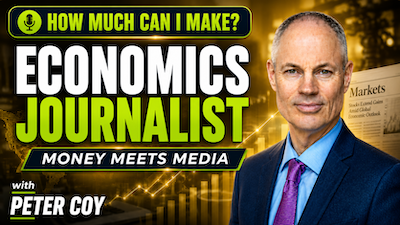
Careers, Money & the Economy Explained: What a Veteran Economics Journalist Wants You to Know
$35K - $150
1/19/26
Most people make career decisions without understanding the economic forces shaping them. Peter Coy - economics journalist for The New York Times,Bloomberg Businessweek, and The Wall Street Journal - breaks down what's really driving salaries, hiring, and opportunity right now.
WHAT YOU'LL LEARN IN THIS EPISODE
How economic forces directly affect your salary, hiring prospects, and career trajectory
How journalism actually works — pitching, shaping, and selling a story
Why Substack and AI are creating new career paths in media
What inflation, interest rates, and job market trends mean for your next move
How to make smarter career and financial decisions by understanding the economy
What a long, sustainable journalism career actually looks like
How much can you make as a reporter?
Entry-level reporter — $35,000 to $55,000 Local outlets and digital startups
Mid-career journalist — $60,000 to $90,000 Regional and national outlets
Senior/veteran journalist — $90,000 to $150,000+ Major outlets, niche authority
Independent (Substack) — $0 to $500,000+ Wildly variable — audience is everything
The uncomfortable truth: staff jobs offer stability but cap your upside. Going independent offers unlimited ceiling — but zero floor. Most successful independent journalists spent years inside newsrooms first.
You may also like:
FAQs
Q: How does the economy affect my salary? A: Directly and constantly. Inflation, interest rates, unemployment levels, and industry cycles all influence what employers can and will pay. Understanding these forces helps you time career moves, negotiate better, and avoid being caught off guard.
Q: What is the best way to understand economics without a degree? A: Read consistently — journalists like Peter Coy translate complex economic forces into plain language. The New York Times, Bloomberg, and The Economist are strong starting points. Podcasts and newsletters have made economic literacy more accessible than ever.
Q: How much do economics journalists make? A: Staff journalists at major outlets earn $60,000–$150,000 depending on experience and outlet. Independent journalists on platforms like Substack can earn anywhere from nothing to well over $500,000 — but audience-building takes years.
Q: Is journalism still a viable career in 2026? A: Yes — but the path looks different than it did a decade ago. Traditional staff jobs are fewer, but independent platforms, newsletters, and podcasts have created entirely new income models for skilled communicators.
Q: How do economics journalists pitch and sell stories? A: It starts with identifying a trend, data point, or question that readers care about — then building a narrative around it. Peter breaks down exactly how that process works inside major newsrooms in this episode.
Q: How is AI changing journalism careers? A: AI is handling data reporting, summaries, and commodity content — which is actually good news for skilled journalists. Analysis, investigation, storytelling, and deep expertise are harder to automate and increasingly valuable.
Q: What career decisions should I be making based on the economy right now? A: That depends on your field — but the principles are universal. Understand whether your industry is expanding or contracting, know your leverage in the current labor market, and never accept a raise without benchmarking it against real inflation. Peter addresses all of this in the episode.
Q: What did Peter Coy learn from decades of covering the economy? A: That most people dramatically underestimate how much economic forces shape their personal financial outcomes — and that basic economic literacy is one of the highest-return investments anyone can make. Listen to hear him explain exactly why.
KEY TAKEAWAY
The economy isn't something that happens to other people — it's the invisible force shaping your salary, your job security, and your next opportunity. The better you understand it, the better every financial and career decision you make. Peter Coy has spent decades translating these forces for everyday readers — and this conversation is one of the clearest, most practical breakdowns of what that actually means for your career.