Custom Shirt Making: Career Insights from a NYC Entrepreneur
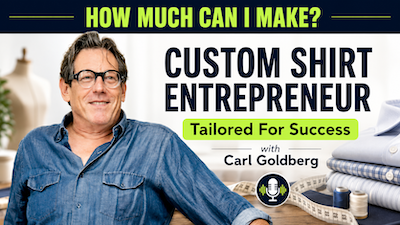
Custom Shirt Maker Career: How Much Do Custom Shirt Makers Earn? Behind Broadway, Hollywood & Bespoke Fashion
$50K – $250K+
In this episode, we visit the Manhattan workroom of Carl Goldberg, founder of Sego Custom Shirts. Over 40 years he's built a 10-person shop that makes bespoke shirts for private clients and dresses Broadway productions and Hollywood films — with credits including The Producers, The Music Man, and shirts for Tom Hanks, Hugh Jackman, Nathan Lane, and Tom Selleck.
What you'll learn in this episode:
How Carl went from selling woolens to tailors to running his own custom shirt workroom
What it takes to break into Broadway and Hollywood costume work
How he built a team of 10 — without advertising
What the craziest custom requests look like (Louis Vuitton scarf turned shirt, anyone?)
Why he requires a five-shirt minimum — and what that means for pricing
How tariffs on Italian mother-of-pearl buttons are hitting small apparel makers right now
What he wishes he'd known before starting out

How much can you earn?
Custom shirt maker income varies enormously depending on whether you're running a one-person operation, a workroom with staff, or a hybrid business serving both private clients and the entertainment industry.
Solo custom clothier (measuring, styling, outsourcing production): $40K–$80K
Small workroom owner with staff (5–10 people, private clients): $80K–$150K
Established workroom with Broadway / film / TV contracts: $150K–$250K+
Per-shirt price range (private client, bespoke): $200–$600+ per shirt
Broadway/film pricing: Comparable to private client rates; rush surcharges apply
Minimum order (Carl's current policy): 5 shirts per new client
Entertainment work — Broadway, TV, film — now accounts for roughly 50% of Carl's business. That segment tends to bring volume and repeat orders: a long-running Broadway show requires two shirts per costume per actor, plus replacements throughout the run.
You may also like:
Check out more unique and unusual careers →
FAQ
Do you need to know how to sew to become a custom shirt maker?
Not necessarily. Carl Goldberg doesn't sew at all. The business of custom clothing can be divided into two tracks: the making side (cutting, sewing, pattern drafting — which does require training) and the clothier side (measuring, styling, sourcing, client management). Many successful clothiers operate as Carl does: overseeing production rather than executing it.
How do custom shirt makers break into Broadway and film?
Almost entirely through referral. Costume designers talk to each other, and a workroom that delivers on quality and turnaround gets passed around. Carl's first Broadway job came through a colleague who recommended him to William Ivey Long, one of Broadway's most celebrated costume designers. From there, productions like The Producers and The Music Man followed.
Why do Broadway productions need so many shirts?
A single costume shirt for a lead actor typically requires at least two copies — one worn while the other is being cleaned. Actors who perspire heavily may need three or more. And since Broadway runs can last years, shirts wear out and need to be replaced. For a long-running production, a custom workroom may supply dozens of shirts for a single show.
What are the biggest challenges for custom shirt makers today?
Carl cites two: finding skilled workers with legal status (the garment industry has historically relied on immigrant labor, and that pipeline has become more difficult) and unpredictable material costs. Tariffs on imported items — like Italian mother-of-pearl buttons — have added unexpected cost to orders, even when buying in volume.
Is there a market for custom shirts beyond wealthy clients?
The custom shirt client isn't always wealthy — sometimes they have an unusual fit, a very specific vision, or a professional need (like a Frank Sinatra tribute performer) that the mass market simply can't serve.
What training do you need to become a custom clothier?
If you want to sew and cut, formal training is essential — fashion schools, apprenticeships, or intensive self-study with experienced mentors. If you want to operate as a clothier (design, fit, source, sell), the path is more varied: working in retail menswear, fabric sales, or for an established clothier are all valid routes in.