
Broadway Makeup Artist & Wig Maker Career: Salary, What It Takes, How to Break In
$35K – $130K+
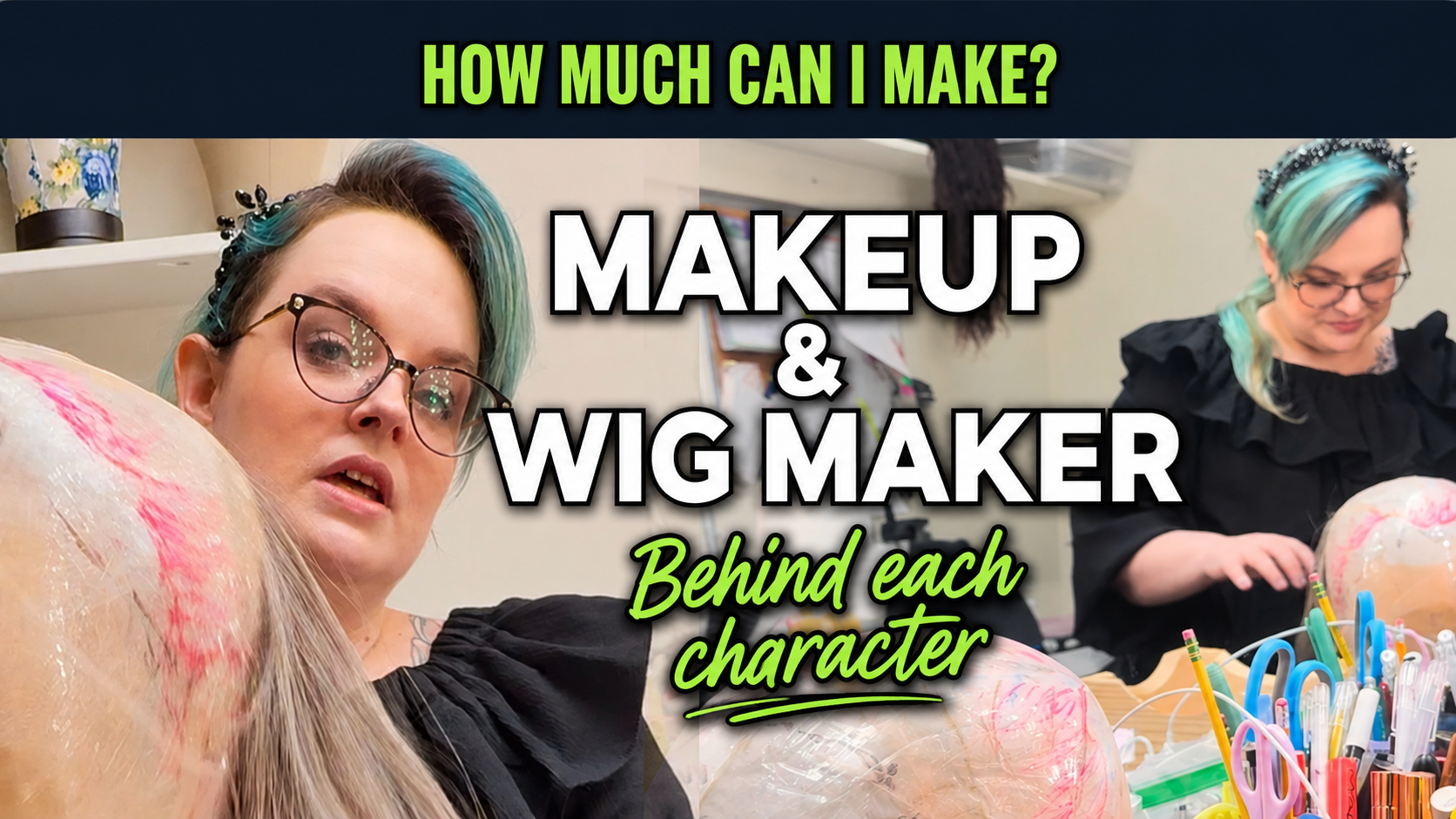
Behind every transformation on a Broadway stage is a team of artists working in the shadows – Loryn Pretorius leads one of them. Loryn has built a career that combines fine art training, serious technical skill, and the kind of hustle that only thrives under pressure. This is what a real creative career in theater actually looks like – glamour, grit, and everything in between.
WHAT YOU’LL LEARN IN THIS EPISODE
- What a Broadway makeup artist and wig maker actually does — show by show, night by night
- What it means to be a hair and makeup supervisor and how you build to that role
- How Loryn turned a fine art and art history background into a sustainable theater career
- What wig making actually involves — and why it is one of the most specialized skills in live performance
- How to break into Broadway and the professional theater world with no connections
- What the earning potential looks like at every level of a theater makeup career
- The reality of working in a field where every single detail is visible from the front row
WHAT BROADWAY MAKEUP ARTISTS AND WIG MAKERS EARN
Theater makeup careers are built on union work, specialized skills, and a reputation that travels by word of mouth through one of the most connected creative communities in the world.
Entry-level and touring productions — $35,000 to $55,000 Most careers begin outside New York — regional theater, touring productions, opera companies, and theme parks. The pay is modest but the experience is foundational. This is where technique is built, speed is developed, and the professional network that eventually opens Broadway doors begins to form.
Mid-level Broadway and off-Broadway — $55,000 to $85,000 Artists working consistently on professional productions in New York, covered by IATSE union agreements that set minimum wages, benefits, and working conditions. Union membership is a significant milestone — it represents professional recognition and dramatically improves both income stability and working conditions.
Department heads and supervisors — $85,000 to $130,000+ Hair and makeup supervisors like Loryn carry both creative and managerial responsibility for an entire production’s look — across every performance of a long run. The combination of technical mastery and leadership ability that this role requires takes years to develop and commands compensation that reflects it.
Wig makers with specialized expertise — premium ratesSkilled wig makers are among the most sought-after and hardest to replace professionals in live entertainment. The training takes years, the work is extraordinarily labor-intensive, and genuine expertise is genuinely rare. Experienced wig makers working on major productions command some of the highest per-project rates in the theater industry.
Film, television, and editorial crossover — highly variable Many theater-trained makeup artists and wig makers work across Broadway, film, and television simultaneously. The skills transfer powerfully and the income potential in film and television — particularly for union members on major productions — can significantly exceed theater rates.
You may also like:
Broadway Stage Manager Career →
Four Times Tony Award winner – Lighting Designer →
For more creative jobs got to →
FAQs
Q: What does a Broadway makeup artist do? A: A Broadway makeup artist applies and maintains character makeup for live theater productions — ensuring consistency across every performance of a run, executing quick changes in the wings, and collaborating with directors and designers to bring characters visually to life. At the supervisor level the role also includes managing a team of artists and maintaining the production’s overall look throughout its entire run.
Q: What does a wig maker do in theater? A: A theatrical wig maker hand-builds wigs from scratch — knotting individual hairs into a lace base one at a time — and maintains them throughout a production’s run. A single Broadway wig can take hundreds of hours to construct. It is one of the most technically demanding and specialized crafts in live entertainment.
Q: How much does a Broadway makeup artist make? A: Entry-level artists working in regional theater and touring productions typically earn $35,000–$55,000. Mid-level Broadway artists covered by IATSE union agreements earn $55,000–$85,000. Department heads and hair and makeup supervisors on major productions earn $85,000–$130,000 or more. Specialized wig makers and artists who cross over into film and television can earn significantly higher rates.
Q: Do you need a degree to become a Broadway makeup artist? A: A degree is not strictly required but formal training — particularly from a dedicated theatrical makeup or wig making program — provides both the technical foundation and the professional network that accelerate entry into the field. Loryn’s master’s degree from the University of North Carolina School of the Arts is a strong example of the kind of conservatory training that opens major production doors.
Q: How do you break into Broadway as a makeup artist? A: Almost everyone starts outside New York — in regional theater, touring productions, opera companies, or theme parks. Building technique, speed, and professional reputation over several years of regional work is the standard path. Joining IATSE Local 798 is the formal gateway to Broadway productions and requires documented professional experience to qualify.
Q: What is IATSE and why does it matter for makeup artists? A: IATSE — the International Alliance of Theatrical Stage Employees — is the union that covers hair and makeup artists on Broadway productions. Union membership establishes minimum wage standards, health and pension benefits, and access to the major productions that define a professional theater career. Getting into the union is one of the most significant milestones in a theater makeup artist’s career.
Q: What is the difference between a makeup artist and a hair and makeup supervisor? A: A makeup artist executes the looks — applying makeup and styling wigs for individual performances. A hair and makeup supervisor leads the entire department — designing or overseeing the overall look for a production, managing a team of artists, maintaining consistency across a long run, and training new team members when cast or crew changes. The supervisor role requires both creative mastery and genuine leadership ability.
Q: Is theatrical makeup different from film and fashion makeup? A: Significantly. Theatrical makeup is designed to read from a distance under stage lighting — which requires heavier application, stronger contrast, and a different understanding of how color and shadow work under theatrical lights versus camera lenses. Quick changes, long run consistency, and working in extremely limited time and space are also unique demands of live theater that film and fashion work simply do not have.
Q: Can you make a living as a Broadway makeup artist? A: Yes — and for union members with specialized skills, a very good one. The combination of consistent show work, union protections, and crossover opportunities in film and television means that experienced theatrical makeup artists and wig makers who build strong reputations in New York can create genuinely sustainable, well-compensated careers.
KEY TAKEAWAY
A career as a Broadway makeup artist and wig maker is not a backup plan for people who love creativity — it is a serious, skilled, and deeply rewarding profession that demands technical mastery, relentless precision, and the ability to perform at the highest level eight shows a week. Loryn Pretorius has built exactly that kind of career, her story is proof that the path from fine art student to Broadway supervisor is real, repeatable, and more accessible than it looks from the outside. The glamour is real. So is the work that creates it.
This episode first published on April 2025