The Entrepreneurship Playbook: How to Start a Business Without a Big Idea, Passion, or Excessive Risk
$0 to $5,000 to Start
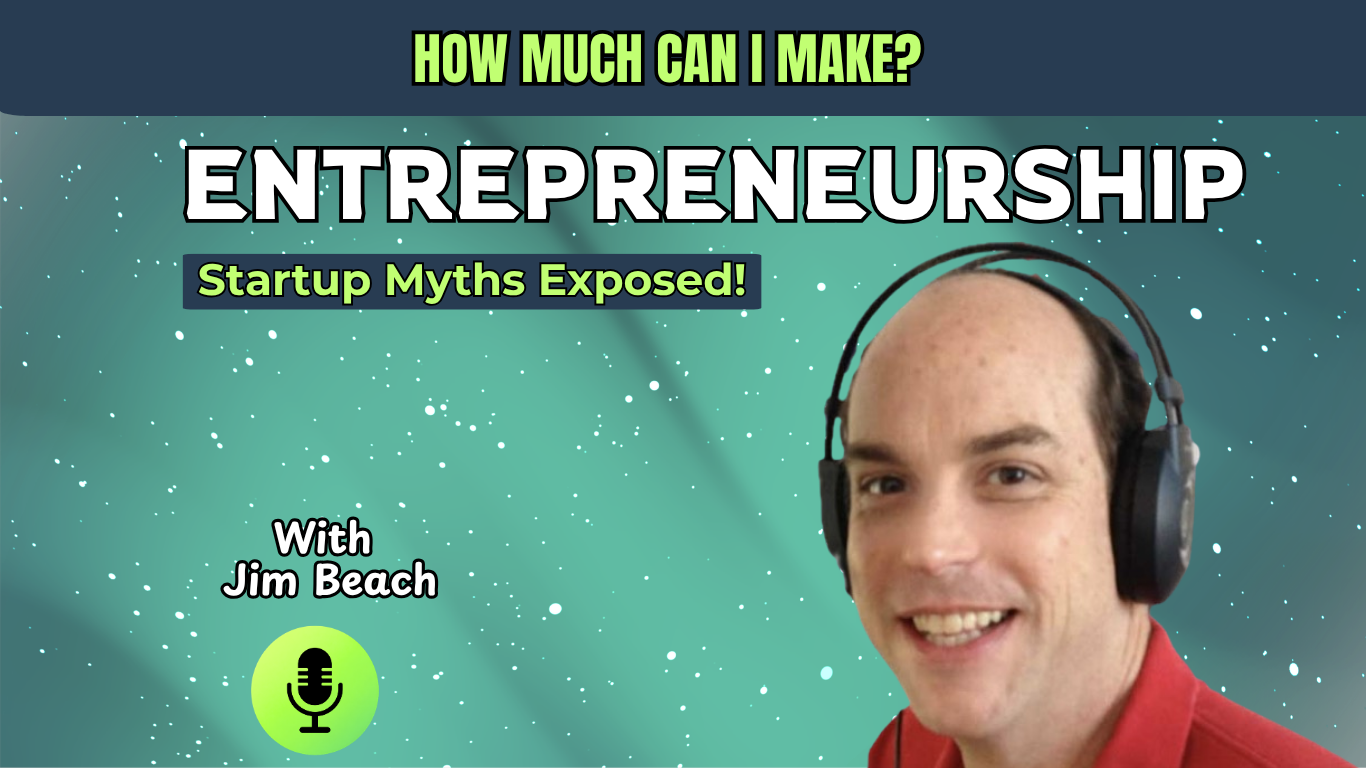
In this episode, we sit down with Jim Beach, serial entrepreneur, McGraw-Hill author, and host of School for Startups — a radio show airing on 100 stations, five days a week. Jim has a contrarian take on what it takes to build a business: forget passion, forget creativity, forget big risk. His philosophy is that anyone can become a successful entrepreneur by copying what already works, validating before spending, and starting with $5,000 or less.
WHAT YOU’LL LEARN IN THIS EPISODE
- Why passion is overrated — and what actually drives startup success
- How Jim built a 100-station radio footprint without traditional syndication
- The startup myths that kill businesses before they launch
- How to use distribution as leverage for credibility, speaking, and book sales
- The truth about business naming and trademarks — and the mistakes that quietly kill startups
- The fastest, lowest-risk path to real income as a first-time entrepreneur

WHAT KIND OF MONEY CAN ENTREPRENEURS MAKE?
- Service businesses (consulting, freelancing): $50,000 – $150,000 in year one if executed well
- Local service businesses: $40,000 – $100,000 with low overhead
- Scalable digital businesses: $100,000 – $500,000+ once systems are in place
- What separates winners from losers: Not the idea — the ability to sell, adapt, and stay consistent
You may also like:
A consultant – turn your skills to $$$ →
Read about entrepreneurship vs. a job →
FAQ
Q: Do I need a unique idea to start a successful business? A: No. Most successful businesses are improvements on existing ideas, not inventions. Execution and consistency matter far more than originality.
Q: What is the easiest business to start with little money? A: Service-based businesses — consulting, freelancing, coaching, or local services — require almost no startup capital and can generate income immediately.
Q: How much money can a first-time entrepreneur make? A: It varies widely. Service businesses can generate $50,000–$150,000 in the first year. Scalable businesses can reach six or seven figures — but rarely overnight.
Q: Do I need to be passionate about my business idea? A: Passion helps sustain you, but it doesn’t replace execution. Many highly successful entrepreneurs built businesses in industries they weren’t passionate about — they were passionate about building and selling.
Q: What mistakes kill startups before they ever make money? A: Poor business naming, trademark issues, underpricing, building before selling, and waiting for the “perfect” idea are among the most common — and most avoidable.
Q: What is the School for Startups approach to entrepreneurship? A: Jim Beach teaches a low-risk, execution-first model — find a proven market, copy and improve what works, sell before you build, and grow using leverage like distribution, speaking, and media.
Q: How did Jim Beach build a 100-station radio network? A: By bypassing traditional syndication entirely and using the radio footprint as leverage — not just for listeners, but for credibility, speaking opportunities, and book sales. Listen to the full episode for the breakdown.
Q: Is entrepreneurship a realistic career path? A: Yes — but not the way it’s usually sold. Forget the overnight success stories. The realistic path involves solving real problems, generating revenue early, and building systems that don’t depend on you alone.
KEY TAKEAWAY
Entrepreneurship isn’t about ideas — it’s about execution and revenue. The entrepreneurs who make it aren’t the ones with the most original concepts. They’re the ones who show up, sell consistently, adapt fast, and never wait for perfect. Jim Beach has been teaching this for decades — and this episode is the clearest, most honest breakdown of how it actually works.
This show first aired in February 2026.