
Goat Farmer Career Insights
How Much Can You Make On A Goat Farm?
$20K – $150K+
7/22/25
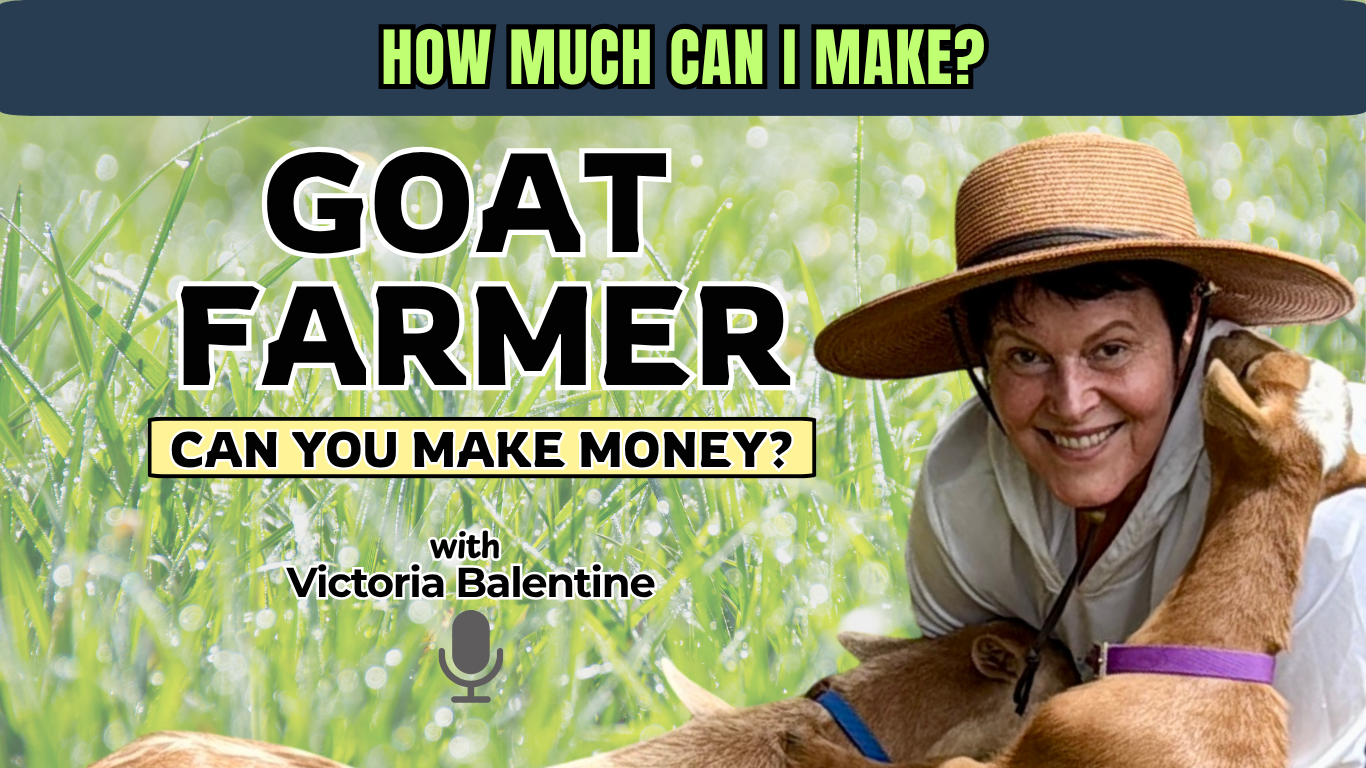
Victoria Balentine, Owner of Shady Farms, tells us what it really takes to run a goat farm. She breaks down the world of goat farming: dairy production, agritourism, direct-to-consumer sales, daily operations, and the business systems that turn a herd of goats into a profitable agricultural business.
What You’ll Learn in This Episode
- How to start a goat farm and what you actually need before buying your first goat
- How goat farmers sell their products — milk, cheese, meat, and breeding stock
- What the daily work of a goat farmer really looks like
- The difference between a homestead operation and a full agricultural business
- How agritourism works and why it’s one of the highest-margin opportunities in farming
- Which goat farm specializations pay the most
- What most people get wrong when thinking about starting a goat farm
Goat Farmer Income Breakdown
Goat farming income depends heavily on scale, specialization, and how you sell. Farmers who sell direct and diversify their revenue streams earn significantly more than those relying on commodity markets.
- Small homestead operation: $20,000–$50,000/year
- Mid-size farm (milk, cheese, meat, or breeding stock): $50,000–$100,000+/year
- Established farm with value-added products: $100,000–$150,000+/year
- Agritourism add-on income (on top of farm earnings): $50,000–$150,000/year additional
- Artisan cheese, direct-to-consumer, strong local brand: $150,000+/year
Top earners combine multiple revenue streams — dairy, artisan products, breeding stock, and agritourism — and build direct relationships with customers rather than relying on wholesale channels.
How Much Can You Make in Agritourism?
Agritourism is one of the most compelling income opportunities for goat farmers, especially those located within driving distance of a major city. Unlike selling milk or meat, agritourism sells an experience — goat yoga, farm tours, school field trips, birthday parties, and seasonal events — at premium price points with very low incremental cost per visitor.
A successful mid-sized agritourism operation can realistically net $50,000 to $150,000 annually in addition to their standard agricultural earnings, provided they have the marketing savvy to attract visitors from nearby urban centers. Victoria shares how Shady Farms built its agritourism program and what infrastructure you actually need to launch one.
You may also like:
Find out more unique and unusual careers →
FAQ
How much does a goat farmer make per year?
Goat farmers typically earn between $20,000 and $150,000+ per year depending on the scale of the operation, what they sell, and whether they’ve added revenue streams like agritourism. Small homestead operations bring in $20,000–$50,000 annually, while established farms with value-added products like artisan cheese and strong direct-to-consumer sales can exceed $150,000 a year.
Is goat farming profitable?
Yes, goat farming can be profitable — but the path depends heavily on how you sell. Commodity meat and milk markets have thin margins. The most profitable goat farmers diversify into artisan dairy products, breeding stock, and agritourism, which command premium prices and significantly better margins than wholesale. Direct-to-consumer sales are especially important to maximize income.
How much can you make from agritourism on a goat farm?
A successful mid-sized agritourism operation can net an additional $50,000 to $150,000 per year on top of standard agricultural earnings. The key is proximity to an urban population center and consistent marketing. Goat farms are particularly well-suited to agritourism because the animals attract visitors naturally — from goat yoga classes to farm tours, school field trips, and seasonal events.
What do you need to start a goat farm?
Starting a goat farm requires land (at minimum 1–2 acres for a small herd, 10+ acres for a mid-size dairy operation), fencing, shelter, feeding equipment, and milking equipment for dairy operations. Startup costs range from $5,000–$15,000 for a small homestead up to $50,000–$100,000+ for a mid-size dairy setup. Having a clear plan for how you’ll sell your products before buying your first goat is essential.
What do goat farmers sell to make money?
Goat farmers generate income through goat milk, artisan cheeses (chèvre, feta, aged varieties), goat meat, breeding stock, fiber from Angora and Cashmere goats, goat milk soap and skincare products, and agritourism experiences. The most profitable operations combine several of these revenue streams rather than relying on a single product.
How do goat farmers sell directly to consumers?
Direct-to-consumer channels include farmers markets, on-farm stores, CSA (community-supported agriculture) memberships, local delivery, and online ordering. Selling direct eliminates the middleman and significantly improves margins compared to wholesale or auction. Building a loyal local customer base is one of the most important factors in growing a goat farm’s income.
What is the difference between dairy goat farming and meat goat farming?
Dairy goat farming focuses on milk production for fluid milk, cheese, yogurt, and other dairy products. Meat goat farming raises animals for sale as chevon (goat meat), which has strong demand in many ethnic food markets. Dairy operations generally require more infrastructure but command higher margins through value-added products. Many farms combine both alongside agritourism to diversify income.
What are the biggest challenges of goat farming?
Common challenges include parasite management, the physical demands of daily milking, the upfront capital needed for processing equipment, navigating state regulations around selling dairy products, and the consistent marketing required to maintain direct-to-consumer sales. Victoria speaks candidly about each of these in the episode.