TV Camera Operator Career: Inside Live Television, Union Rates & Life Behind the Lens
$30/hr – $150/hr
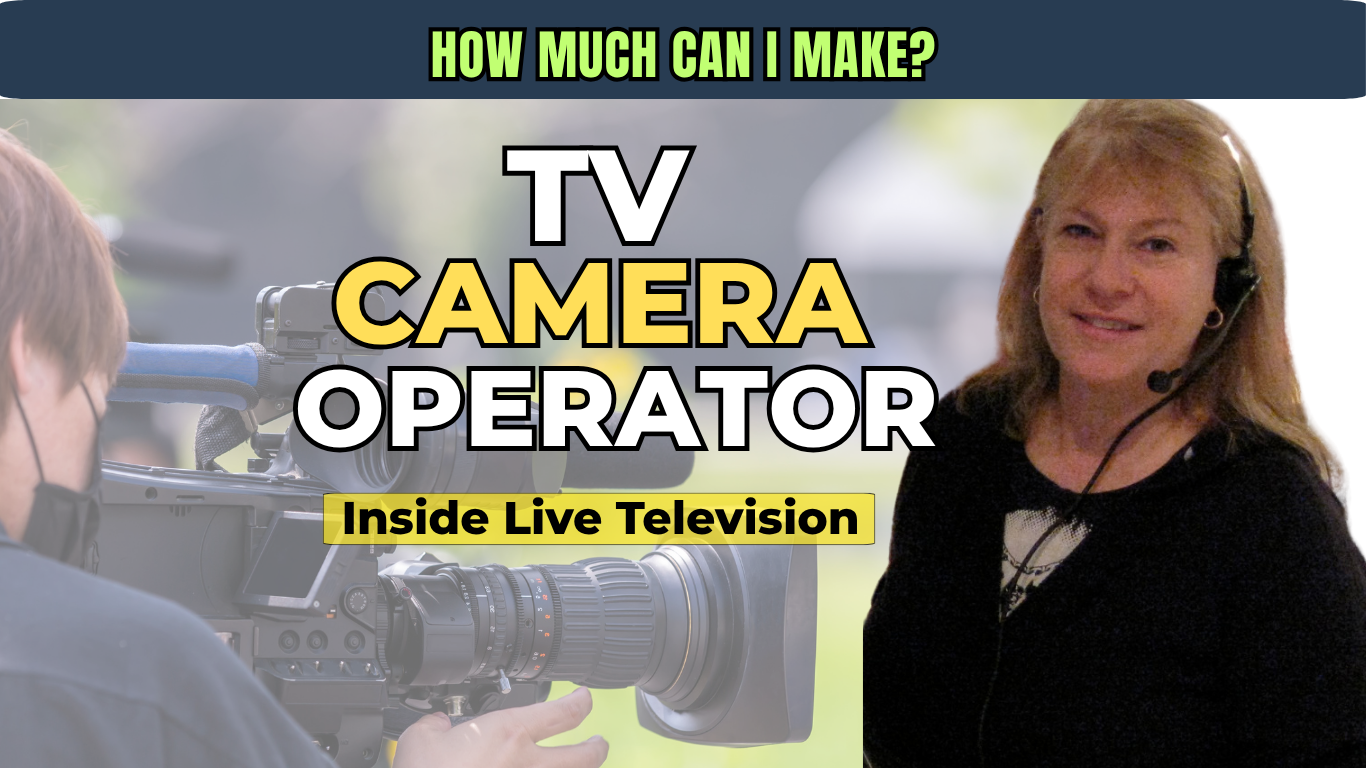
In this episode, we go behind the camera with Lisa Rosenberg, a veteran TV camera operator with nearly four decades of credits including the Tonight Show, Jimmy Fallon, Good Morning America, and 60 Minutes. She breaks down what the job actually pays, how union rates work, what a day on a major talk show looks like from the floor — and why robotic cameras are quietly taking over the industry she built her career in.What you’ll learn in this episode:
What you’ll learn in this episode:
- What union TV camera operators actually earn — and how above-scale negotiation works
- The difference between studio work and field work, and what each does to your body
- What a full day on the Jimmy Fallon show looks like from the camera floor
- How to break into the industry — including one colleague’s unconventional cupcake strategy that worked
- What it’s really like being a woman on a live TV crew
- Why robotic cameras are already replacing operators, and which jobs are going first

How much can you earn?
TV camera operator pay runs on two tracks: union scale, which is the contractual floor, and negotiated above-scale rates, where reputation and leverage determine everything. Most working operators are freelance, moving from show to show, booking weeks or seasons at a time.
Union scale (IATSE, video/camera operator): ~$500–$550 per 8-hour day
This is the IATSE baseline for broadcast work. Some shows now run “California eights” — a built-in lunch hour — or 10-hour days with a meal included. Scale is lower than most people expect; the real money comes from negotiating above it.
Network rate (NBC, ABC): ~$30–$40/hr
Major network scale is surprisingly low. Operators with established reputations push back on network rate and negotiate above-scale before agreeing to a booking.
Mid-tier freelance rate: ~$75–$80/hr
A working freelance operator with solid credits can typically land here on shows that aren’t at the very top of the market.
Top entertainment rate: ~$125–$150/hr
The highest-paid operators — those with long tenure on flagship shows like The Daily Show or Stephen Colbert — can reach this range. These shows also tend to protect their crews, offering regular raises and multi-month bookings rather than day-to-day freelance work.
Long-term bookings are the real prize. A 20-week season at $75/hr on a 10-hour day is roughly $75,000 before overtime. Add union health insurance and pension contributions and a steady long-run show is often worth more than a higher rate on a short-term gig.
What does a TV camera operator actually do?
The job is more physical than most people expect. In the field — news, sports, remote shoots — you’re carrying the camera on your shoulder, with strain falling on your back and neck. In a studio on a multi-camera show, the work shifts to your arms and legs: moving dollies, repositioning between shots, staying locked on a moving subject while tracking what the director is calling in your headset.
On a show like Jimmy Fallon, the day starts around 10 a.m. A camera meeting with the director follows at 10:30 — shot sheets are reviewed, segments are walked through, positions are assigned. Lunch runs roughly 1 to 2, then afternoon rehearsals continue until the audience loads in around 4:30 or 5:30. The show shoots live-to-tape starting around 6 p.m.
From that point until wrap, you don’t leave your position. You’ve already used the bathroom. You have water within reach and cough drops unwrapped in your pocket — Lisa learned that one the hard way, locked on a long lens on Tim Walz during a vice presidential debate with her throat closing up and nowhere to go.
Six or more cameras may be working simultaneously. The director is in your ear continuously alongside the assistant director, who’s pre-setting upcoming shots. You hear both, execute your current shot, and anticipate the next one — all without shaking the camera, losing focus, or getting in another operator’s way.
The skills that matter most are the ability to find a shot fast, emotional containment during intense interview content, and the ability to work inside a crew that functions like a small orchestra. Operators who shoot news or entertainment for years develop an almost involuntary attentiveness — Lisa says she’ll spot a celebrity on the sidewalk before anyone around her even looks up.
YouYou may also like:
Indie Filmmaker – Blood, Sweat, and Tax Incentives –→
Check out our creative careers category →
FAQ
Do TV camera operators have to join a union? Most professional broadcast and studio work requires IATSE membership. The union sets scale rates, negotiates contracts with individual shows, and provides health and pension benefits — which are often as valuable as the hourly rate itself.
What is the difference between studio and field camera work? Field work is harder on the shoulders and back from carrying the camera. Studio multi-camera work strains the arms and legs through dolly operation and constant repositioning. Studio work also tends to offer longer bookings and more predictable hours.
Are TV camera operators being replaced by robots? Yes, in some sectors. Studio news has largely moved to robotic cameras. Archive and theater documentation projects that previously used human crews are switching to remote-operated systems. High-end live entertainment and field work still rely heavily on human operators, but automation is putting real pressure on entry- and mid-level studio positions.
Is TV camera work freelance or full-time?
Many camera operators work freelance, taking on project-based jobs. Some roles, especially in news or studios, may offer full-time employment.
How do you break into TV camera operating? Most operators start in adjacent roles — audio, lighting, or PA work — and get trained on camera through field news or local production. Joining IATSE through a station or production company is the standard path. Building relationships with directors who can vouch for your work is often more important than any formal credential.
What skills does a TV camera operator need? Technical camera operation is the foundation. Beyond that: the ability to find shots quickly under pressure, physical stamina, emotional steadiness during intense interview content, strong crew communication, and in live television, the ability to perform without errors with no safety net.
Is this a good career for someone interested in media and production?
Yes. It offers creative work, varied environments, and strong earning potential as you gain experience and industry connections.
This show first aired on May 2025