
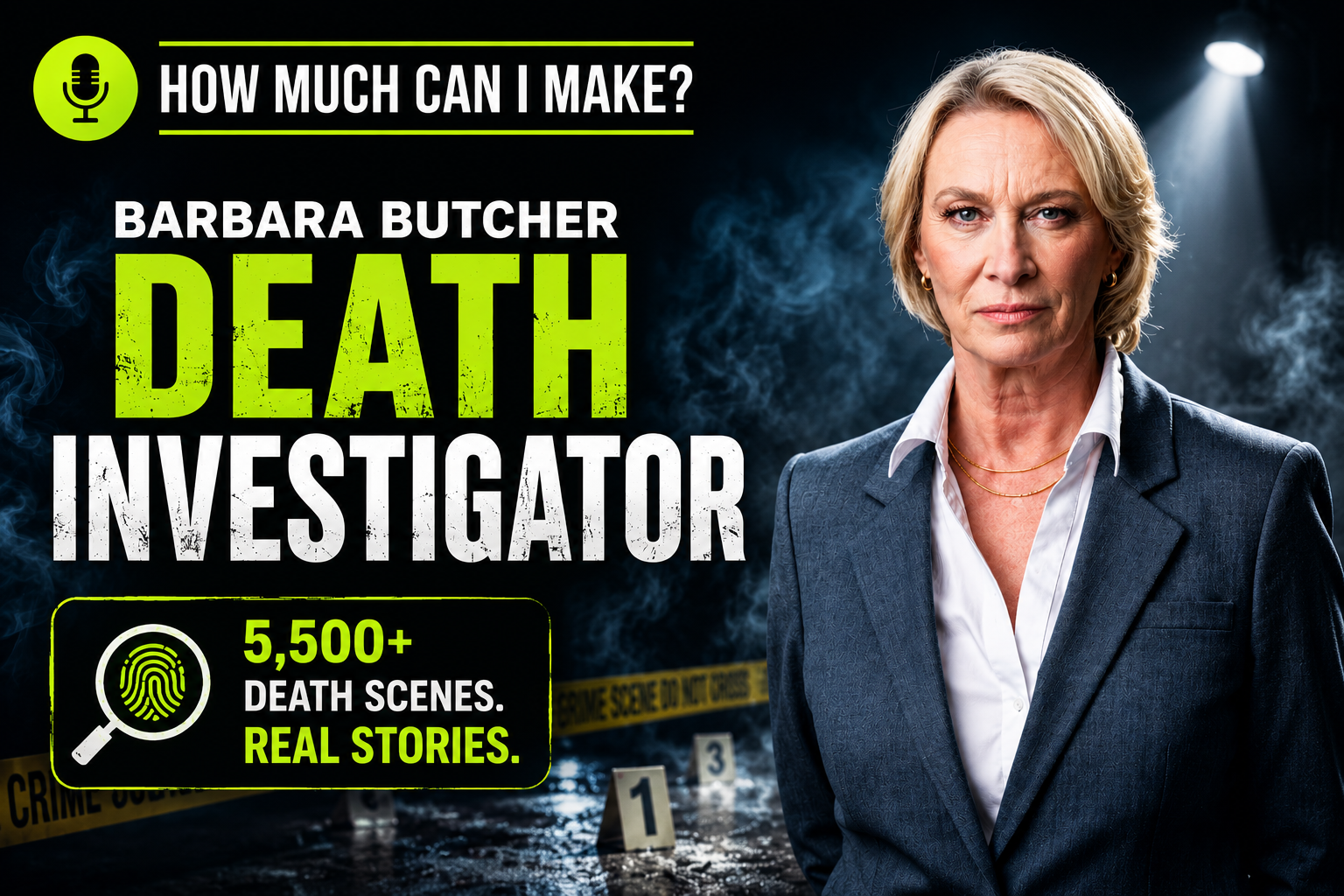
Death Investigator Reveals: The Death & Crime Scenes: Salary & the Human Cost
$100K – $150K+
Go behind the scenes with legendary NYC death investigator Barbara Butcher, who spent 23 years with the New York City Office of Chief Medical Examiner investigating homicides, overdoses, suicides, suspicious deaths, and mass-casualty events. Barbara worked more than 5,500 death scenes – including the recovery effort after 9/11 and shares what this unusual but essential career really looks like day to day.
What you’ll learn in this episode:
- What a death investigator actually does at a crime scene
- How to break into death investigation (and what degree you need)
- How much you can earn – entry level to senior investigator
- What it was really like to work Ground Zero after 9/11
- The emotional toll nobody talks about – and ways to deal with it
How much can you earn?
Death investigation can be a surprisingly high-paying career, especially in large cities like New York.
- Entry-level death investigator: $100K–$110K+
- Mid-career forensic investigator: $120K–$140K+
- Senior investigator or leadership roles: $150K+ with overtime
Many medicolegal investigators also receive significant overtime pay, especially in major metropolitan medical examiner offices.
You may also like these episodes:
Other Unique and Unusual Jobs →
FAQ
What does a medicolegal death investigator do? They respond to death scenes to determine cause and manner of death – whether a death was a homicide, suicide, or accident – and work alongside police and forensic pathologists.
Do you need a medical degree to become a death investigator? Not anymore. While early investigators needed medical backgrounds, today a degree in forensic science, criminal justice, or a related field with trauma experience is typically sufficient.
How much does a death investigator make in NYC? Entry-level investigators at the NYC Office of Chief Medical Examiner currently start around $100K–$110K before overtime, with experienced investigators earning $130K–$140K+.
Is death investigation a stable career? Yes. Every city and county requires medicolegal death investigation services, making it a consistently in-demand field within the public sector.
What is the hardest part of being a death investigator? According to Barbara, it’s the emotional cost of closing yourself off to do the work — and then trying to reopen when you go home.
This episode first aired May 2026