eCommerce Photography Career: Salary, Skills & How Products Sell Online
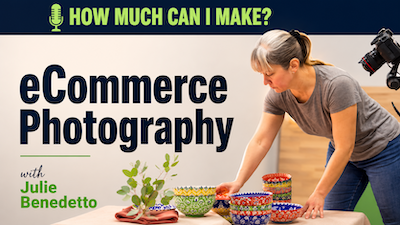
Julie Benedetto – Ecommerce Photography Career
$40K – $250K+
Thinking about becoming an ecommerce photographer? In this episode, commercial and product photographer Julie Benedetto explains what it really takes to build a successful career creating the images that sell products online. From photographing jewelry and wine bottles to developing full advertising campaigns, Julie shares how ecommerce photography combines creativity, marketing, branding, business strategy, and technical expertise. She also explains how AI is changing the industry, why licensing matters, and why some photographers are now earning royalties instead of a flat fee.
What you'll learn in this episode:
How to become an ecommerce and product photographer
What ecommerce photographers actually do every day
Why photography is only a small part of the job
How product photographers find and keep clients
The difference between white-background and lifestyle photography
How photographers price projects, licensing, and usage rights
How AI is changing commercial photography
Why some photographers are negotiating royalty deals instead of flat fees
What skills brands are looking for today

How much can you earn?
E-commerce photography pay varies widely by experience, client type, and business model. Freelancers can charge per image, per day, or — increasingly — take royalties on a brand's sales instead of a flat fee.
Entry-level / assistant photographer: $40K–$55K per year
Freelance / staff e-commerce photographer: $55K–$90K per year
Established studio owner / art director: $90K–$150K per year
Top-tier: brand partnerships & royalty deals: $150K–$300K+ per year
Shots on white (per image): $25–$100
Styled / lifestyle images: starting around $250 per image
Full day rate (large collections): $800–$3,000+ per day
Royalty / equity partnerships: negotiated % of sales instead of a flat fee, typically for 6–12 months
What does an e-commerce photographer actually do day to day?
An e-commerce photographer spends most of their time on work that happens before and after the shutter clicks. Pre-production means sourcing props and backgrounds, developing art direction, and building physical sets — sometimes for 25-item collections shot in a single day. The actual photography, according to Julie, is only about 15–20% of the job. The rest is post-production: clipping products out of white backgrounds, retouching, converting 360-degree spins into video files, and resizing everything for the dozens of different platforms and screen sizes a brand sells on. Photographers increasingly also manage the business side — pitching clients, negotiating usage licensing, and, for some, building long-term revenue-share partnerships with the brands they shoot for.
You may also like:
Photographer - Thereal business behind photography→
Check out more creative careers →
FAQ
How much do e-commerce photographers make?
Entry-level photographers often earn between $40,000 and $60,000, while experienced commercial photographers commonly earn $80,000 to over $150,000. Successful studio owners working with national brands can earn considerably more.
Do you need a photography degree?
Not necessarily. Many successful product photographers learn through assisting professionals, building portfolios, and gaining commercial experience. Strong technical skills, lighting knowledge, and business ability are often more important than a specific degree.
What is the difference between product photography and ecommerce photography?
Product photography focuses on photographing products. Ecommerce photography includes the entire online sales process, such as lifestyle imagery, white-background photos, social media content, 360-degree images, video, file preparation, and platform optimization.
Is AI replacing product photographers?
AI is changing workflows, but businesses still need accurate, high-quality photographs of real products. AI is increasingly used as a production tool rather than a replacement for professional photographers.
How are e-commerce photographers paid?
Photographers typically charge based on the number of final images, licensing rights, production complexity, and usage. Some experienced photographers are also beginning to negotiate royalty agreements with startups instead of accepting only flat fees.
What skills are most important for e-commerce photographers?
Beyond photography, successful ecommerce photographers need strong lighting skills, art direction, styling, marketing knowledge, client communication, retouching, production planning, and an understanding of branding and online retail.
This show first aired in July 2026.