Radio Career: Real Pay, On-Air Life & How to Break In
$25K – $100K+
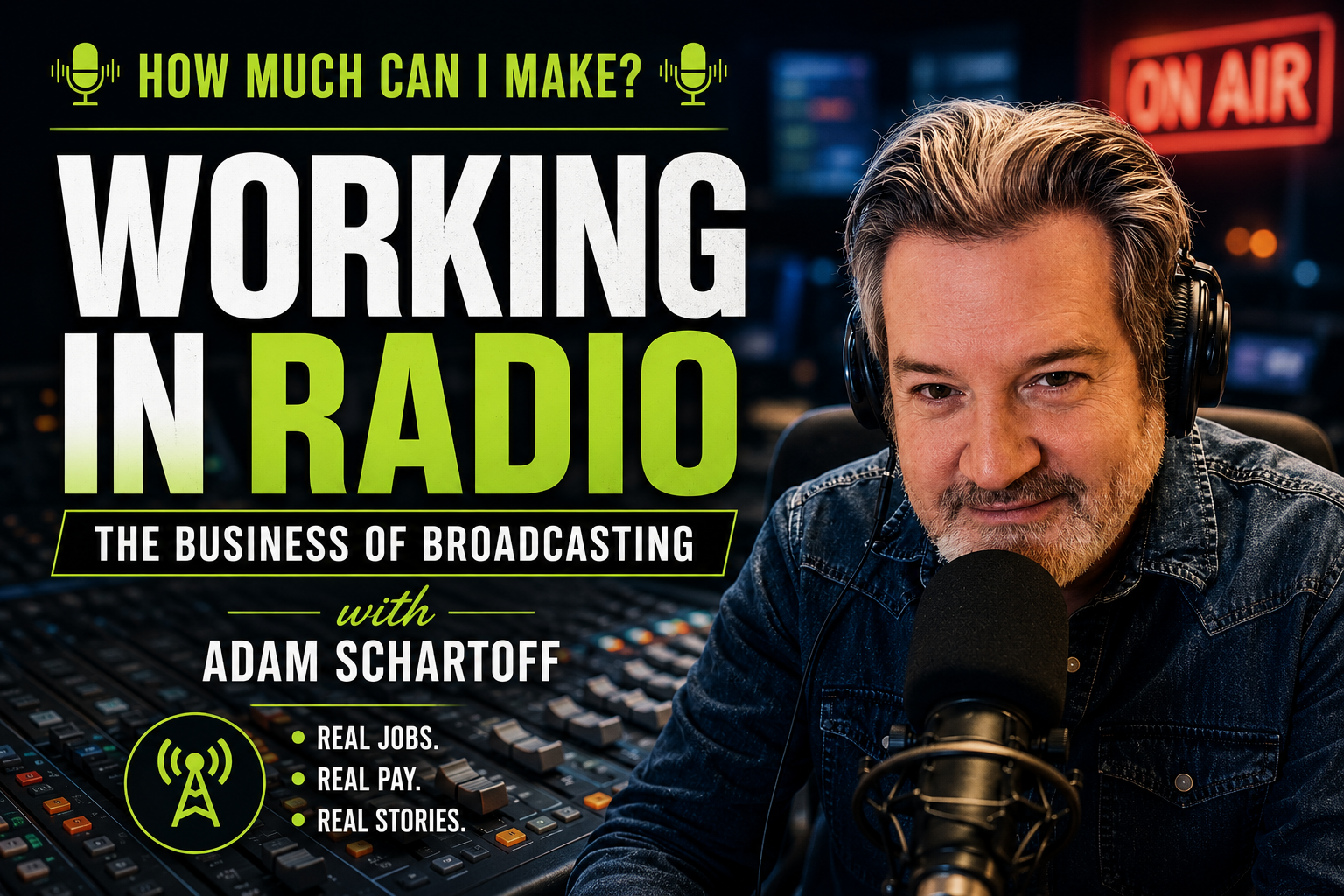
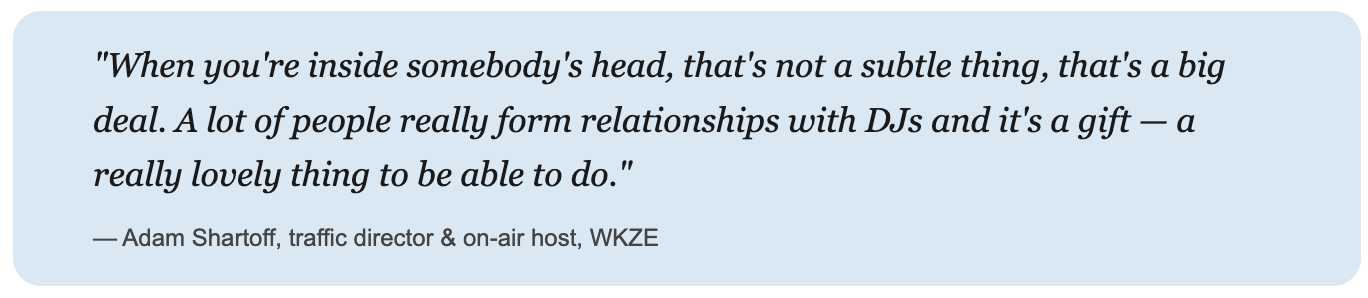
In this episode, we sit down with Adam Schartoff traffic director and on-air host at WKZE — a beloved independent music station serving the Hudson Valley and Berkshires. He breaks down what a radio traffic director actually does, what it’s like to go on air for the first time in your 50s, and whether AI is coming for the DJ booth.
What you’ll learn in this episode:
- How radio stations actually operate behind the scenes
- The different jobs available in today’s radio industry
- What a radio traffic director does — and why it’s more complex than it sounds
- How on-air shifts work at an independent station and how anyone can get one
- What radio DJs and on-air hosts actually earn at small vs. large stations
- How to break into radio at any age, including as a career changer
- Why streaming has been a net positive for indie radio’s reach
- Whether AI is coming for on-air talent — and what WKZE thinks about that
How much can you earn?
Radio pay varies enormously by market size, station ownership, and role. Large corporate stations in major markets pay more; small independent stations like WKZE offer lower salaries but often more variety and on-air opportunity.
Entry-level / small market on-air talent: $25,000–$40,000/year
Mid-market DJ or morning drive host: $40,000–$70,000/year
Major market on-air personality: $75,000–$150,000+/year
Traffic director (small to mid-market): $30,000–$55,000/year
Radio sales (commission-based): highly variable; $35,000–$100,000+
You may also like:
For Music and other Creative Careers →
FAQ
What does a radio traffic director do?
A traffic director manages advertiser contracts, schedules commercials to run at the times and frequencies clients have purchased, and ensures every ad airs as promised. They use specialized traffic software and work closely with sales and programming. At smaller stations, they often also handle billing.
How do you break into radio?
The best entry points are internships at local stations (even in high school), college radio stations, and podcasting to build microphone comfort and an on-air personality. Adam’s advice: don’t wait for a DJ role to open up — come in through sales, production, or any available door. Stations often let motivated employees transition to on-air shifts over time.
Do you need a good voice to be a radio DJ?
The “voice of God” baritone is no longer a requirement. Today, audiences connect with personality, authenticity, and relatable delivery more than a classic announcer’s tone. Adam puts it directly: “I like a voice with character.” What matters is that you sound like yourself — and that you’re genuinely interested in the music and stories you’re sharing.
Is AI coming for radio jobs?
At corporate stations, AI-generated content is already being tested. But at independent stations built on human connection — like WKZE — it’s a different story. “What we’re offering is human beings,” Adam says. The relationships that listeners form with specific DJs are the product. That’s not easily replicated.
How has streaming affected radio?
For independent stations, streaming has been almost entirely positive. It vastly expands reach — WKZE now streams to listeners internationally. While audio content now competes with podcasts and audiobooks for attention, streaming has helped stations build audiences far beyond their FM footprint.
What is the Film Wax podcast?
Film Wax is Adam Shartoff’s long-running interview podcast focused on independent film. He launched it in 2011 — early in podcasting’s history — and has published nearly 900 episodes featuring directors, actors, cinematographers, editors, producers, and film festival organizers. He describes it as “like going to film school.” You can find it wherever you listen to podcasts.
This episode first aired in 2025.