Film Financing & How Hollywood Deals Actually Get Made
$45K – $1M+
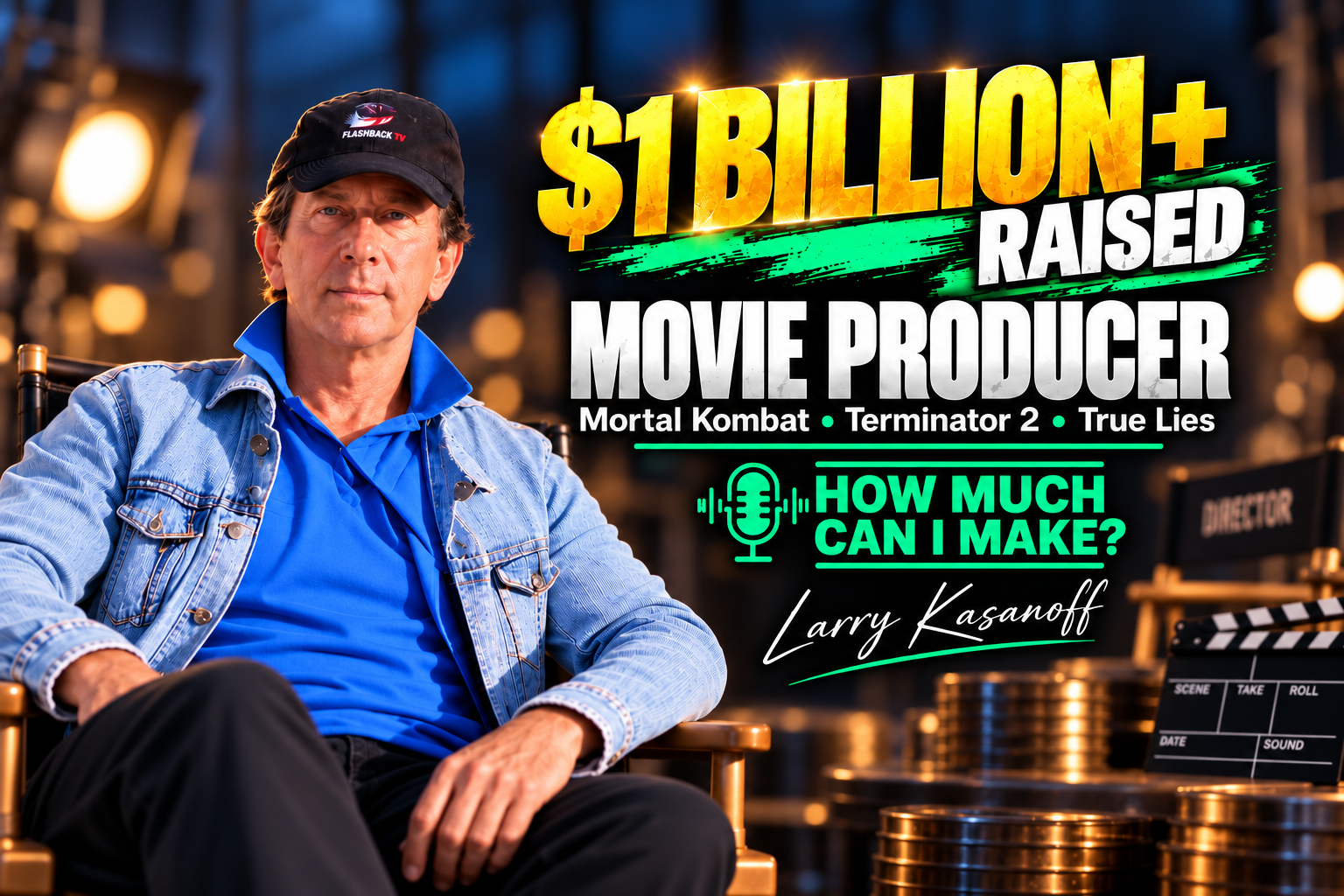
In this episode, we go behind the scenes with Hollywood producer Larry Kasanoff, who has raised roughly a billion dollars for more than 200 films. He greenlit the Oscar-winning Platoon at 25, worked on Terminator 2, and built Mortal Kombat into a 30-year franchise. He explains how movies get financed, how producers really get paid, and why AI could make movies cheaper and more global.

What you’ll learn in this episode:
- How a 25-year-old bet his job on Platoon, and won Best Picture
- The difference between studio financing and independent financing
- How movie producers get paid: fees, backend, and keeping the rights
- Why a movie can gross $400 million and still lose money
- How he turned a “piece of crap video game” into the Mortal Kombat franchise
- How a press conference brought $25 million of production to Orlando
- Why AI dubbing and cheaper effects could make movies more global
How much can you earn?
Larry’s honest answer: “That’s like saying how much can a real estate broker make?” There is no standard pay scale for producers. Income depends on how many films you get made, the size of the budgets, and how much risk you’re willing to take in exchange for profit participation or rights. The past few years — the pandemic, the strikes, and the L.A. fires, have pushed many fees down.
Entry level (production assistant, coordinator, associate producer): about $45K–$70K per year
Median for producers and directors (all industries): $90,360 per year (BLS, May 2025)
Median in the motion picture and video industry: $105,300 per year (BLS, May 2025)
Top 10% of producers and directors: $198K+ per year
Independent producer fee: varies widely by budget, and is often cut or deferred to get the film made
Established studio producers: producing fees that can reach $1M+ per film, plus backend
Backend: a percentage of the film’s profits, valuable on a hit, but hard to get and sometimes disputed
Rights ownership: the biggest upside, on a hit, merchandise, games, TV, and theme parks usually out-earn the movie itself
What does a movie producer actually do day to day?
A movie producer is the person who makes a film exist. Much of the job happens long before cameras roll: finding or acquiring a script or a property like a video game or toy brand, securing the rights, attaching a director and cast, and above all raising the money. That can mean pitching a major studio, pre-selling distribution rights to companies in other countries, or chasing independent investors, sometimes for years. Once a film is financed, the producer negotiates with unions, cities, and vendors to control costs, picks where to shoot, approves budgets and costumes, and solves whatever goes wrong during production. After the film is finished, producers work on distribution, marketing, and spinoffs soundtracks, TV series, animation, games, and live shows. As Larry puts it, the movie “has to exist. I see it every day,” and the producer’s job is to do whatever it takes to get it made.
You may also like:
Sitcom Writer – Dawn DeKeyser →
Check out more creative jobs →
FAQ
How much do movie producers make?
According to the U.S. Bureau of Labor Statistics, the median salary for producers and directors was $90,360 in May 2025, and $105,300 in the motion picture and video industry. The top 10% earn more than $198,000. Successful film producers can earn far more through per-film fees, a share of profits, and owning rights to a franchise.
How do movie producers get paid?
Producers usually receive a producing fee plus a “backend,” which is a percentage of the film’s profits. Some producers take a smaller fee in exchange for keeping rights to the property — sequels, TV, animation, music, and merchandise. Larry Kasanoff did this with Mortal Kombat and later sold many of those rights back to Warner Bros.
What is the difference between studio and independent film financing?
With studio financing, a major studio such as Warner Bros. or Paramount pays for the movie and controls it. With independent financing, the producer raises money from investors, distributors in other countries, or tax incentives, and keeps more control. Larry compares a studio deal to moving back into your parents’ house: they pay for everything, but you live under their rules.
Who invests in movies?
Movie money comes from major studios, independent studios like A24 and Neon, international distributors that pre-buy rights for their territories, private investors, tax-incentive investors, and wealthy families who want to be in the film business. Unlike Wall Street, film financing is not organized — producers are always chasing money from many sources.
How can a movie make $400 million and still lose money?
If a movie costs $250 million to make and another $150 million to market, a $400 million box office does not cover its costs, especially since theaters keep a share of ticket sales. Disputes over studio accounting can also leave participants with “no profits” even on a big hit.
How do you become a movie producer?
There is no required degree. Many producers start as assistants, development executives, or in production and work their way up. Larry Kasanoff decided to be a producer as a child after seeing a James Bond movie and was hired out of school as head of production at Vestron. His advice: ask anyone for help with your project, don’t play it safe, and when a deal stalls, go bigger instead of smaller.
Will AI replace movie producers?
AI can lower visual-effects costs and produce natural-looking dubbing in any language, which helps movies reach global audiences. But a film still needs a great idea, a good director, and a producer to get it made. Larry Kasanoff sees AI as a big opportunity for the film business rather than a replacement for producers.
This show first aired on Oct. 2026