Physical Therapist Career Insights: A Journey to Improve Lives
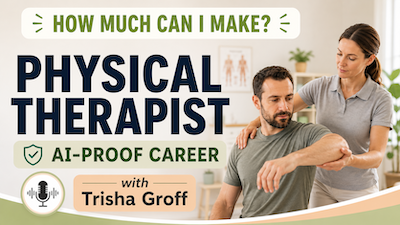
Physical Therapist Reveals the Reality of the Job: Salary, Education & Helping People Heal
$65K - $130K+
Seven years of school to become a physical therapist? Yep—you heard that right! Trisha Groff, Director at AccessPT in Woodstock, NY, spills the beans with her career insight on what it really takes to break into (and thrive in) the demanding yet rewarding PT job. From helping weekend warriors bounce back, to witnessing jaw-dropping recoveries—like the 70+ man who learned to walk on two prosthetic legs. Trish’s stories will have you rethinking what’s possible.
What you'll learn in this episode:
How to become a physical therapist
What physical therapists actually do all day (it's more physical than you think)
How much you can earn — from your first job to director-level
The difference between physical therapy and chiropractic care
Why documentation burns PTs out faster than patients do
What conditions PT can treat that most people don't know about (including vertigo and disc injuries from sneezing)
Why patient motivation is often the key to recovery

How much can you earn?
Physical therapy requires a Doctor of Physical Therapy (DPT) degree and offers strong earning potential with growing demand nationwide.
New Graduate Physical Therapist: $85,000-$95,000
Mid-Career Physical Therapist: $100,000-$120,000+
Clinic Director / Senior PT: $120,000-$130,000+
Compensation varies by region, specialty, healthcare setting, and management responsibilities.
What does a physical therapist do?
Physical therapists help patients recover from injuries, surgeries, chronic pain, neurological conditions, and mobility limitations. Treatment often includes:
Strengthening exercises
Stretching and mobility work
Manual therapy
Balance and coordination training
Post-surgical rehabilitation
Sports injury recovery
Patient education and home exercise programs
Physical therapists work closely with patients over several weeks or months, helping them regain function and improve quality of life. According to Trisha, some of the most common cases include:
Back pain
Neck pain
Tennis elbow
Rotator cuff injuries
Achilles tendonitis
ACL injuries
Sports injuries
Pickleball-related injuries
Vertigo
Stroke rehabilitation
Mobility issues related to aging
Education and training requirements
To become a licensed physical therapist, you typically need:
Bachelor's degree (often Biology, Psychology, Exercise Science, or a related field)
Doctor of Physical Therapy (DPT) degree
Clinical rotations and supervised training
State licensure
Most physical therapists spend six to seven years completing their education and training.
What makes someone successful in physical therapy?
Trisha says successful physical therapists share several traits:
Strong communication skills
Empathy and patience
Desire to keep learning
Interest in movement and human anatomy
Problem-solving ability
Motivation to help others achieve goals
She also emphasizes that the best therapists continue learning new techniques throughout their careers rather than relying on the same treatment approach for every patient.
Challenges of the profession
Like many healthcare careers, physical therapy comes with challenges:
Extensive documentation and insurance paperwork
Managing large patient caseloads
Balancing administrative responsibilities
Preventing professional burnout
Encouraging patients to stay committed to home exercises
According to Trisha, patient outcomes often depend on what happens between appointments just as much as what happens in the clinic.
You may also like:
Acupuncturist Career Insight →
Behind the Operating Room Doors - OR Nurse→
Science of Babies: Feldenkrais Method →
FAQ
How much does a physical therapist make starting out? New graduates entering outpatient PT today typically earn between $85,000 and $95,000. A decade ago, starting salaries were closer to $60,000–$65,000, so the field has seen meaningful gains.
Do you need a doctorate to become a physical therapist? Yes. Physical therapists must earn a Doctor of Physical Therapy (DPT), which typically takes six to seven years total — a bachelor's degree followed by a three-year doctoral program.
What does a physical therapist actually do all day? PTs evaluate patients, design and run individualized treatment plans, perform hands-on manual therapy, guide patients through exercises, and document everything. Directors also manage staff, schedules, and clinic operations on top of a full patient caseload.
What conditions can physical therapy treat? PT is most commonly associated with back pain, sports injuries, and post-surgical recovery — but it also treats vertigo, neurological conditions, pelvic floor issues, repetitive strain injuries, and disc problems, among others.
Why do physical therapists burn out? Documentation is the leading culprit. PTs are required to write detailed clinical notes for every patient, and when there isn't enough time during the workday, it spills into evenings at home. The physical demands of the job add to the strain over time.
Is physical therapy a good career? For people who are drawn to hands-on patient care and want to see real, measurable progress, it's deeply rewarding. The pay has improved, the job market is strong, and the work has genuine impact — but the documentation burden and physical demands are real factors to weigh.
This show first aired on Sept. 2025