Inside Boutique Hotel Ownership: Career Path & Profit
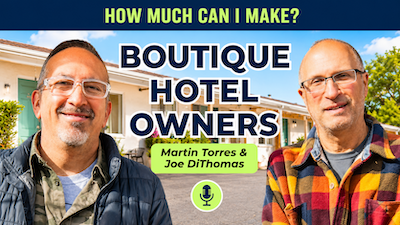
Boutique Hotel Owners Reveal the Business: Guests, Staffing, Costs & What It Really Takes
$300K – $800K+
Varies by size, season, occupancy rate, and location
Quit your job, move to the mountains, and become a hotel entrepreneur—easy, right? Martin Torres and Joe DiThomas of Graham & Co.actually did it. In this episode we explore what it takes to run a boutique hotel, from buying or converting a property to managing guests, pricing rooms, dealing with local towns and building a profitable hospitality brand.
What you’ll learn in this episode:
How Martin and Joe went from New York City careers to owning a Catskills boutique hotel
What makes running a hotel very different from running an Airbnb
Why guest experience is now a major part of hospitality
The real costs: staffing, insurance, maintenance, taxes, breakfast, and loans
What kind of personality you need to run a boutique hotel
You will learn what it really takes to buy and run a 20-room boutique hotel in the Catskills. Martin and Joe, owners of The Graham & Co., explain how they stepped into the hotel business, what surprised them, what costs the most, and why hospitality is about much more than giving someone a room.
How much can you make?
Boutique hotel revenue depends heavily on room count, occupancy rate, nightly rate, and how many income streams you layer in. For a 20-room property like the Gram Co, here's how the earning tiers break down.
Getting started (first 1–2 years): In the early years, you're learning the seasonality of the business, overstaffing, and carrying high loan costs. Martin and Joe took out a commercial loan — what they call a "newbie loan" — just to survive year one. Revenue may look solid on paper, but after staff payroll, flood insurance ($30K/year in their case), occupancy tax, sales tax, and maintenance, profit margins are thin.
Finding your footing ($300K–$500K gross revenue): Once you understand the ebbs and flows — when to staff up, when to cut back, how much breakfast food to buy, how to price for holiday weekends — the business starts to work for you. A 20-room hotel averaging $200–$250/night at 60–70% occupancy in a market like the Catskills can generate $300K–$500K annually before expenses.
Adding revenue layers ($500K–$800K+): Hotels that add experiences — massage services, sound baths, cocktail hours, DJ weekends, corporate retreats — generate meaningful revenue beyond room bookings. Corporate buyouts, in particular, can fill all 20 rooms for multiple nights at premium rates. Martin and Joe are building new lodge structures specifically to capture more of this market.
The biggest expense: Staff. The Gram Co employs around 10 people during peak season, most of them on payroll. That's the line item that surprises most first-time hotel owners.
What does a boutique hotel owner actually do?
A boutique hotel owner is part host, part manager, part marketer, part problem-solver, and part real estate operator.
The work can include:
Managing bookings and guest communication
Hiring and scheduling staff
Handling repairs and maintenance
Creating guest experiences
Managing breakfast, linens, supplies, and cleaning
Watching expenses closely
Dealing with taxes, insurance, and loans
Building a brand people remember
Martin and Joe explain that with an Airbnb, you often prepare the space and leave. With a hotel, you are there when guests are there. You are responsible for the full experience.
What makes a boutique hotel different?
The Graham & Co. is not just a place to sleep. It is built around design, atmosphere, and community. Guests come for the Catskills, the fire pit, the pool, the quiet, and the feeling of getting away.
Martin and Joe talk about guests meeting at the fire pit, holiday weekend receptions, cocktail hours, sound baths, massage partnerships, and creating a place where people arrive tense and leave relaxed.
They also made a clear choice: no TVs in the rooms. Their idea is that people do not come to the Catskills to watch TV. They come to be outside, disconnect, and have a different kind of experience.
You may also like:
For more careers in business and entrepreneurship →
Learn the basics of entrepreneurship →
FAQ
How much does a boutique hotel owner make per year?
A small boutique hotel with 15–25 rooms can generate $300K–$800K or more in gross annual revenue, depending on location, nightly rates, occupancy, and additional income streams like experiences or corporate retreats. After expenses — staff payroll, insurance, taxes, maintenance, and loan repayments — net income varies widely. Many owners in the early years run lean or break even while learning the business.
How much does it cost to buy and open a boutique hotel?
Commercial real estate deals for small hotels vary enormously by market, but expect a lengthy closing process — Martin and Joe spent nearly a year closing their loan. Banks are cautious with first-time hotel buyers and may require significant capital. Beyond the purchase price, budget for renovations, staffing, insurance (including flood insurance if required), and a cash reserve to cover operating losses in year one.
What's the difference between running an Airbnb and running a boutique hotel?
With an Airbnb, you set it up and leave before guests arrive. With a hotel, you're there — managing staff, handling problems, creating experiences, and directly shaping how guests feel. The hospitality layer is what commands higher rates and repeat business, but it also demands much more time and infrastructure.
Do boutique hotel owners need hospitality experience?
Not necessarily, but you'll need to learn fast. Martin and Joe had no hotel background — they leaned on Joe's real estate experience for the purchase and Martin's advertising instincts for branding and guest experience. They over-staffed early, took on a large loan, and learned the seasonal rhythms of the business over time. A strong team (including people who can say no) matters more than a hospitality degree.
What taxes does a boutique hotel owner pay?
Hotel owners typically pay occupancy tax (also called hotel tax), sales tax, and federal and state income taxes. In New York, Martin and Joe saw the hotel occupancy tax double from 2% to 4% while they owned the property. Tax obligations depend heavily on your state and municipality, so working with an accountant familiar with hospitality businesses is essential.
Is owning a boutique hotel worth it?
It depends on what you're optimizing for. The income can be strong once the business matures, but the hours are long, the work is unpredictable, and the financial risk is real. Martin and Joe describe the summer as a daily grind that leaves them exhausted by Labor Day. But they also describe guests who call the hotel their happy place, repeat visitors who come every Christmas, and the satisfaction of building something they're proud of. For the right person, that's worth a lot.
This show first aired on Sept. 2025