
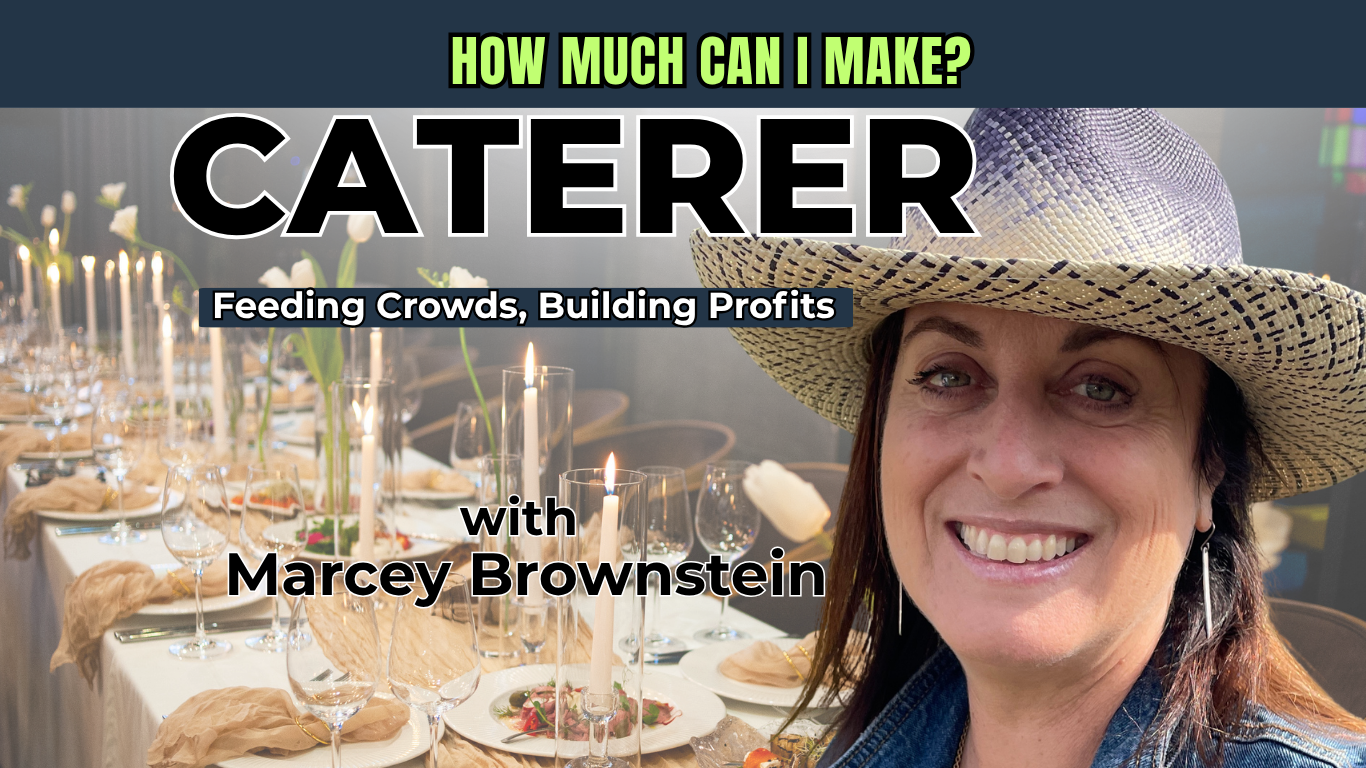
How to Start a Catering Business: One Entrepreneur’s Journey From Side Hustle to Full-Time Success
$20K – $500K+ varies widely
WHAT YOU’LL LEARN IN THIS EPISODE
- How Marcey went from another career entirely to running a successful catering operation
- What the first year of a catering business actually looks like — the wins, the chaos, and the lessons
- How to price catering jobs, manage a team, and build a client base from scratch
- What separates a catering side hustle from a real, sustainable business
- The moment Marcey knew she had to go all in — and what happened when she did
- What it actually costs to start a catering company and what you need before you launch
HOW MUCH CAN A CATERER MAKE?
Catering income varies widely depending on whether you’re freelancing on weekends or running a full operation — but the earning potential scales fast once systems and reputation are in place.
Side hustle caterer — $20,000 to $50,000 per year Working evenings and weekends around another job. Small events, private dinners, and local gatherings. This is where most catering careers begin — and where Marcey started.
Growing catering business — $60,000 to $120,000 per year A dedicated operation with repeat clients, a small team, and a recognizable local brand. Revenue at this stage depends heavily on event volume and average job size.
Established catering company — $150,000 to $500,000+ per year A full operation with a professional kitchen, staff, and corporate or high-end event clients. At this level the owner’s income reflects both their personal expertise and the systems they’ve built around them.
Niche & high-end catering — the highest ceiling Caterers who specialize — in dietary needs, luxury events, corporate contracts, or destination experiences — consistently command premium pricing and higher margins than generalists.
You may also like:
Startup Myths Exposed – Entrepreneur ship →
Explore more entrepreneurship careers →
WHAT IT ACTUALLY TAKES TO START A CATERING BUSINESS
Most people underestimate how much goes into turning a catering passion into a real business. Marcey breaks it down honestly — here’s what actually matters:
Your first clients come from your existing network. Almost every catering business starts with people who already know and trust you. Friends, family, colleagues, and community connections are your first sales team — whether you ask them to be or not.
Pricing is where most beginners leave money on the table. Undercharging is the most common and most costly mistake new caterers make. Ingredients, labor, equipment, transport, and time all have to be factored in before a single plate hits the table.
A commercial kitchen changes everything. Working from a licensed commercial kitchen — whether owned or rented — is the line between a hobby and a legitimate business. It unlocks larger events, proper insurance, and the credibility that serious clients require.
Your reputation is your marketing. In catering, word of mouth is everything. One extraordinary event generates referrals that no advertising budget can buy. One bad one travels just as fast in the other direction.
Hiring your first employee is the hardest and most important step. Marcey talks candidly about what it means to go from doing everything yourself to trusting someone else with your reputation. It’s the moment a job becomes a company.
FAQ
Q: How do I start a catering business with no experience? A: Start small and say yes before you feel ready — exactly the way Marcey did. Offer to cater small events for people in your network, build your skills and your confidence simultaneously, and let your reputation grow organically before investing in equipment or a kitchen.
Q: How much does it cost to start a catering business? A: A bare-bones catering side hustle can start with as little as $2,000–$5,000 in equipment and supplies. A fully licensed operation with commercial kitchen access, insurance, and proper equipment typically requires $20,000–$50,000 to launch properly.
Q: Do you need a license to start a catering business? A: Yes — most states require a food handler’s permit, a business license, and access to a licensed commercial kitchen. Requirements vary by location so checking with your local health department before launching is essential.
Q: How do caterers find clients? A: Word of mouth and personal referrals drive the majority of catering business, especially in the early years. Social media — particularly Instagram and Facebook — is a powerful tool for showcasing food and events. Corporate accounts, venue partnerships, and event planner relationships are the next level once the foundation is established.
Q: How much should I charge for catering? A: A common starting point is $50–$150 per person for full-service catering, depending on the menu, staffing, and event type. The most important rule is to calculate every cost — ingredients, labor, transport, equipment, and your time — before setting any price. Undercharging is the fastest way to work hard and still lose money.
Q: Is catering a good business to start? A: For the right person — yes. The startup costs are relatively low compared to a restaurant, the hours are flexible, and the income scales with the quality of your reputation. The tradeoffs are real though — evenings, weekends, physical demands, and the constant pressure of performing at someone’s most important moments.
Q: How long does it take to build a successful catering business? A: Most catering businesses take two to four years to reach consistent profitability. The businesses that grow fastest are those that nail a niche, price correctly from the start, and invest in their reputation before investing in equipment.
Q: What is the hardest part of running a catering business? A: Marcey’s answer — and most experienced caterers agree — is managing people. The food is the part you love. Building, training, and trusting a team to represent your standards is the part that actually determines whether the business grows or stays stuck.
KEY TAKEAWAY
Marcey Brownstein didn’t wait until she felt ready. She started with small gigs, said yes to opportunities before she had all the answers, and built a real business one event at a time. The catering industry rewards reputation, consistency, and the courage to keep going through the messy middle. If you love food and love creating experiences for people — the business model is there. The question is whether you’re willing to do the work that nobody sees between the events that everyone does.
This episode first published in 2025