Food Manufacturer Entrepreneur
How Much Does a Food Manufacturer Make? Inside Organic Nectars' Operation
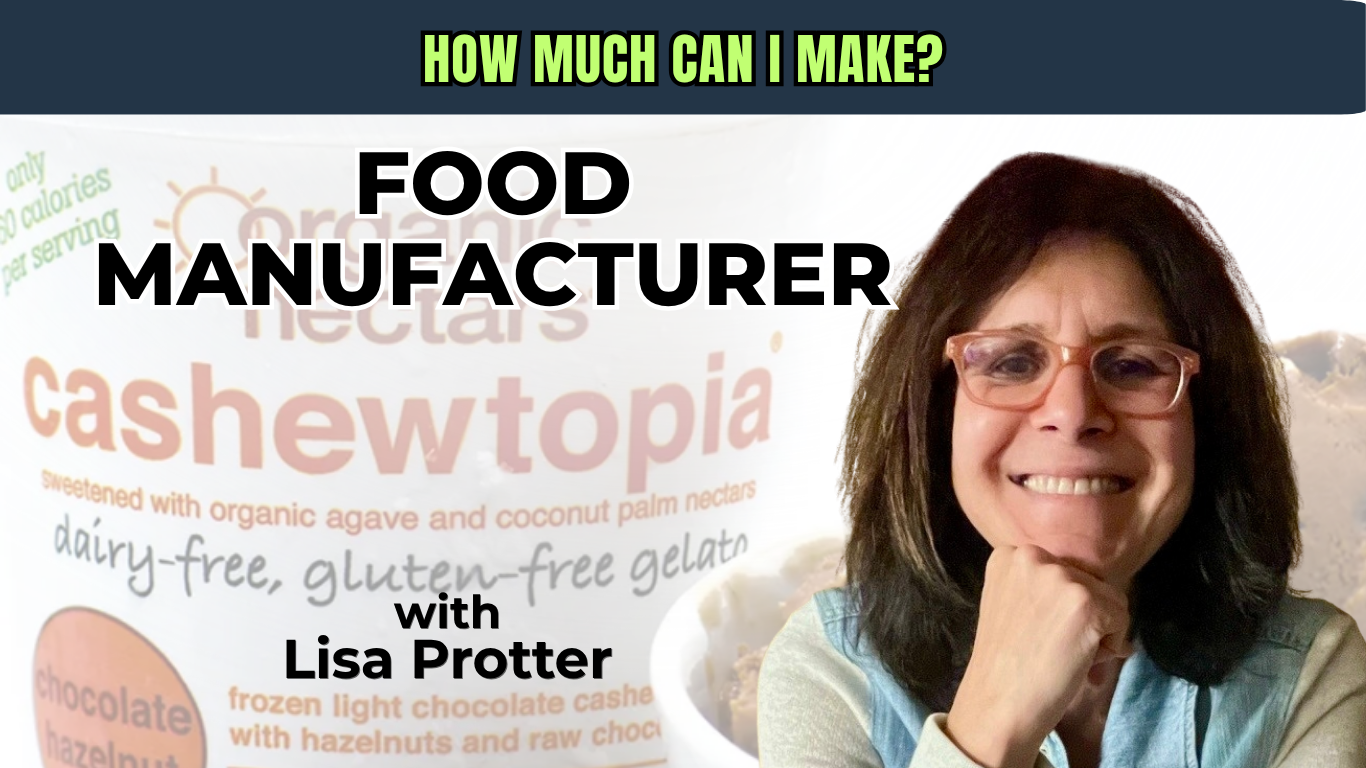
Here’s some tasty career insight for all you foodies out there: ever dreamt of turning your homemade goodies into a real-deal business? In this episode Mirav sits down with Lisa Protter—CEO and co-founder of Organic Nectars —to talk about her job as a food manufacturer and the wild ride from basement startup to full-on warehouse operation in the Hudson Valley.
Lisa carved out a career in clean, organic, plant-based treats long before “dairy-free” and “raw agave” hit the mainstream. She shares how she scaled her passion project into a thriving business that handles everything in-house—from importing ingredients to manufacturing and distribution. Spoiler: no co-packers, no shortcuts, just pure hustle.
This episode dishes out the delicious truth of food entrepreneurship. Grab a snack and tune in!
You may also like
Caterer Entrepreneur Journey →
Other business and entrepreneurship ideas →
FAQ
How much does a food manufacturer make?
Earnings for food manufacturers vary widely depending on the scale of operation. Small-batch or artisan producersrunning a single kitchen or co-packing line often net $40,000–$70,000 a year after costs, especially in the early years. Mid-sized manufacturers with wholesale accounts, retail distribution, or a small factory typically bring in $80,000–$150,000, while owners of established regional or national brands can see profits well into the $250,000+ range, depending on margins and volume.
What factors affect a food manufacturer's income the most?
Margin control is everything in food manufacturing. Ingredient costs, packaging, co-packing fees, spoilage/waste, and distribution costs all eat into revenue before profit is calculated. Manufacturers who own their equipment and production space instead of renting co-packer time, and who sell direct-to-consumer or direct-to-retail instead of through multiple distribution layers, tend to keep more of each dollar earned.
Do food manufacturers need a big facility to get started?
No — many start in shared commercial kitchens, co-packing facilities, or small rented spaces before scaling to a dedicated plant. Facility size usually grows in step with order volume, not the other way around.
Is food manufacturing a profitable business to start?
It can be, but margins are typically thin (often 10–20% net) compared to service-based businesses, so profitability depends heavily on volume, efficient production, and strong retail or wholesale relationships. Many manufacturers reinvest heavily in equipment and growth in the first several years rather than taking a large personal salary right away.
What licenses or certifications does a food manufacturer need?
Requirements vary by state and product type, but most manufacturers need a food facility license, product-specific health department approvals, and often HACCP or GMP certification if they're selling wholesale or across state lines. Products like dairy, meat, or canned goods usually carry additional regulatory requirements.
How do food manufacturers make money beyond selling their product?
Some diversify through private-label manufacturing for other brands, co-packing services for smaller producers, licensing their recipes or brand, or wholesale supply agreements with grocery chains and food service companies.
This episode was first published in 2025